

Emotional intelligence is the ability to recognize, understand, and manage your emotions while also being aware of the emotions of others. It is not about suppressing feelings or pretending everything is fine. Instead, it is about responding thoughtfully rather than reacting impulsively. In today’s fast-paced world, emotional intelligence has become an essential life skill that influences relationships, leadership, parenting, and personal growth.
At MindHope, we emphasize emotional wellness as a core foundation for mental well-being, and developing emotional intelligence is one of the most powerful ways to strengthen that foundation.
What Is Emotional Intelligence? The 4 Core Pillars
Daniel Goleman’s framework breaks emotional intelligence into four deeply connected pillars. Imagine them as a foundation. If one area is weak, the others struggle to stay steady.
Self-Awareness (The Foundation)
Self-awareness is where everything begins. It’s the ability to pause and notice what’s happening inside you. Not just “I’m stressed,” but “I feel anxious because I’m worried about failing.” That deeper understanding changes everything.
When you’re self-aware, you recognize your emotional triggers. You understand your strengths without inflating them and your weaknesses without denying them. You become honest about your reactions instead of justifying them. That clarity softens emotional intensity. The simple act of naming an emotion often reduces its power over you.
Self-Management (Control Without Suppression)
Once you understand your emotions, the next step is managing them. Self-management doesn’t mean suppressing feelings or pretending they don’t exist. It means acknowledging them and choosing how to respond.
It shows up when you stay calm during criticism instead of reacting defensively. It appears when you adapt to unexpected changes rather than resisting them. It grows when you choose optimism after setbacks instead of spiraling into self-doubt. Self-management is the space between stimulus and response and that space is where emotional intelligence lives.
Social Awareness (Empathy in Action)
Social awareness shifts the focus outward. It’s your ability to read emotional signals in others, even when nothing is explicitly said. It’s noticing the subtle tone change in someone’s voice, the hesitation in a reply, or the silence that says more than words.
This is empathy in motion. It allows you to understand team dynamics, sense unspoken tension, and anticipate needs. In leadership, marketing, relationships, or daily conversations, social awareness builds connection because people feel seen and understood.
Relationship Management (Influence and Trust)
When self-awareness and empathy come together, relationship management becomes natural. This is where emotional intelligence becomes visible to others.
It’s how you communicate during conflict. It’s how you collaborate without ego. It’s how you inspire rather than control. Strong relationships are not built on authority or intelligence alone they are built on trust, and trust grows from emotional understanding.
Why Emotional Intelligence Matters
Emotional intelligence is often described as a “soft skill,” but its impact is anything but soft. Studies examining over a million professionals show that top performers consistently score higher in emotional intelligence. These individuals not only perform better they often earn more and lead more effectively.
Higher emotional intelligence is linked to stronger relationships because it improves communication and reduces unnecessary conflict. It is also connected to lower stress levels, as emotionally aware individuals regulate reactions before they escalate. In marketing and business, emotionally intelligent messaging performs better because it connects to real human concerns, fears, and desires. When you understand what your audience truly feels, your communication becomes authentic and powerful.
On the other hand, low emotional intelligence often leads to burnout, impulsive decisions, strained relationships, and workplace tension. The difference lies in awareness and intentional response.
Step 1: Develop Self-Awareness
Self-awareness is the foundation of emotional intelligence. Without understanding your emotions, you cannot manage them effectively. Many people react automatically without pausing to identify what they are actually feeling. Developing awareness requires intentional reflection and honesty.
Identifying Your Emotional Patterns
Start by observing your reactions throughout the day. Ask yourself what emotion you are experiencing and what triggered it. Instead of labeling your feelings broadly as “upset,” try to define them more precisely, such as frustration, disappointment, anxiety, or insecurity. The more accurately you name your emotions, the more control you gain over them.
Practical Techniques for Building Awareness
Journaling, mindfulness exercises, and daily reflection can significantly enhance emotional clarity. Even spending five minutes reviewing your day and noting emotional triggers can build long-term self-awareness. You can explore additional emotional growth tools and self-development resources at here
Step 2: Practice the Power of Pause
Emotional intelligence often exists in the brief moment between stimulus and response. When something triggers you, the natural tendency is to react immediately. However, pausing allows you to respond intentionally rather than impulsively.
How Pausing Improves Decision-Making
Taking a few deep breaths or stepping away from a heated conversation creates space for rational thinking. This short delay reduces emotional intensity and helps you evaluate the outcome you truly want. Over time, practicing this pause strengthens emotional control and reduces unnecessary conflict.
Step 3: Strengthen Emotional Regulation
Emotional regulation involves managing how emotions are expressed without suppressing them. Suppression pushes feelings down, often leading to emotional buildup. Regulation, on the other hand, acknowledges emotions while choosing healthy ways to process them.
Healthy Regulation Strategies
Techniques such as controlled breathing, physical activity, writing your thoughts before speaking, or discussing concerns with someone you trust can help process emotions constructively. These strategies build resilience and prevent emotional overwhelm.
The Difference Between Suppression and Regulation
Suppression ignores emotions, while regulation works through them. Emotional intelligence requires facing feelings directly but expressing them in a balanced and mature manner.
Step 4: Cultivate Empathy
Empathy is the ability to understand and respect the emotions of others. Emotional intelligence extends beyond self-management; it includes the capacity to connect with others authentically.
Improving Active Listening Skills
Practicing empathy means listening without interrupting, avoiding immediate judgment, and validating another person’s experience. Even if you disagree, acknowledging their perspective strengthens communication and trust. Empathy transforms conversations from confrontations into collaborative discussions.
Step 5: Enhance Social Skills
Strong social skills naturally develop as emotional intelligence increases. Effective communication, respectful disagreement, and healthy boundary-setting are signs of emotional maturity.
Communicating with Emotional Clarity
Using “I” statements instead of accusatory language reduces defensiveness and encourages understanding. Being mindful of tone, body language, and non-verbal cues further improves relationship quality. People with high emotional intelligence create environments where others feel safe and heard.
Conflict Resolution with Emotional Intelligence
Handling disagreements calmly and constructively prevents escalation. Emotional intelligence allows you to focus on solutions rather than personal attacks, strengthening both personal and professional relationships.
Step 6: Reflect and Continuously Improve
Emotional intelligence is not developed overnight. It requires consistent reflection and adjustment. Regularly evaluating how you handled emotional situations helps identify patterns and areas for growth.
Daily Reflection Questions
Consider asking yourself whether you responded thoughtfully, what triggered certain reactions, and how you might handle similar situations differently in the future. Reflection turns everyday experiences into opportunities for personal development.
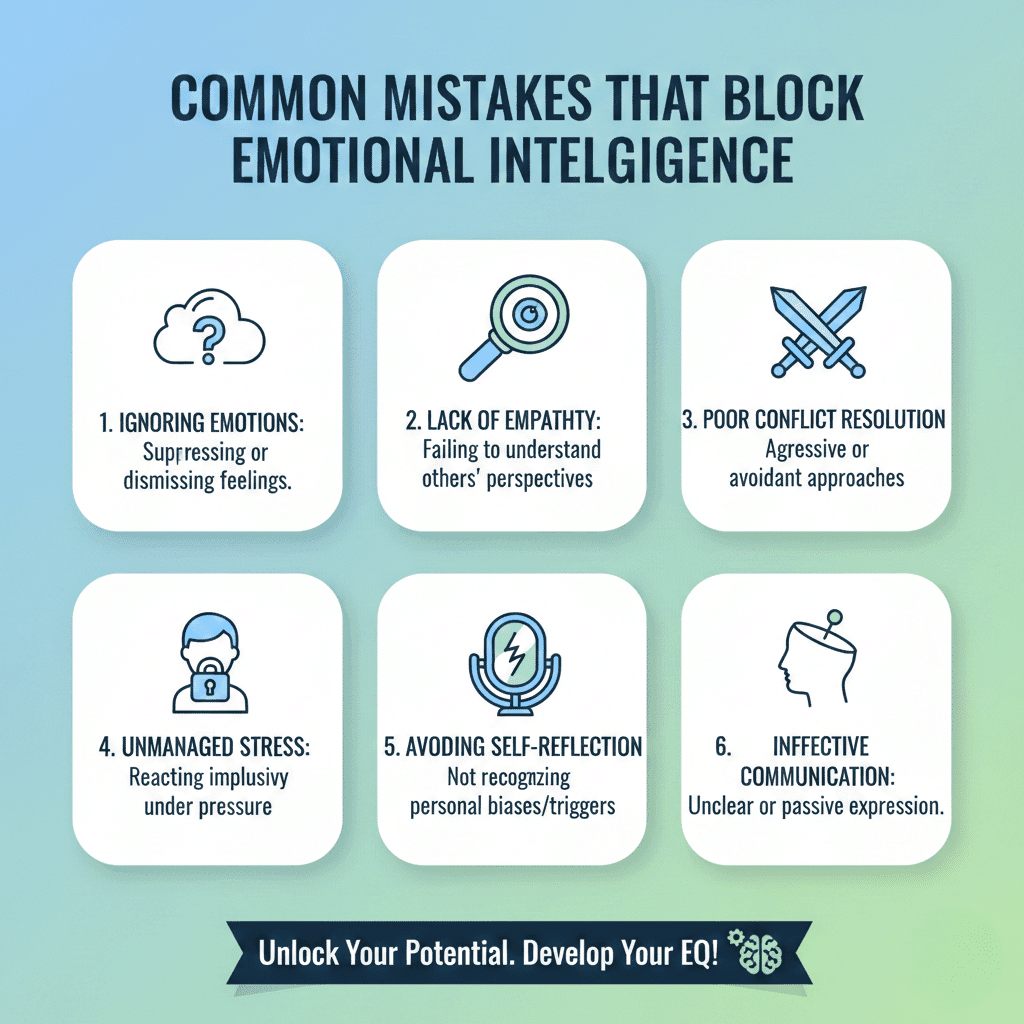
Common Mistakes That Block Emotional Intelligence
Over-relying on logic while dismissing emotions creates disconnection because most decisions are emotionally influenced before logic confirms them. Avoiding feedback prevents growth, even though discomfort is often part of progress. Ignoring personal boundaries leads to emotional exhaustion, while assuming everyone expresses emotions the same way creates cultural misunderstandings.
Awareness of these pitfalls protects your growth.
Long-Term Growth in Emotional Intelligence
Emotional intelligence develops through consistent practice. Periodic self-reflection helps track progress. Reading thoughtful books, taking structured courses, and engaging in honest conversations about emotional experiences strengthen awareness. Tracking improvements in stress levels, communication clarity, and relationship quality offers meaningful feedback.
Habits take time to solidify, but small daily actions compound powerfully. Emotional intelligence is not built overnight, it is built gradually, through intention.
Conclusion
Emotional intelligence is not about becoming overly sensitive or suppressing feelings. It is about becoming emotionally skilled.
When you understand your emotions, your decisions improve. When you understand others’ emotions, your relationships deepen. When both align, your influence grows naturally.
In a world increasingly shaped by technology, emotional intelligence remains one of the most valuable human advantages you can develop.