
Mental Health Self-Help Tools
Psychology-backed assessments & emotional wellbeing tools.
Quick, private, and no login required.
Self-Assessments
Anxiety Test (GAD-7)
A widely used 7-question screening to measure anxiety levels.
Stress Test (PSS-7)
Understand your perceived stress and ability to cope.
Mood Stability (MDQ)
Check for sudden shifts in energy, mood, and activity.
Psychology Tools
Quick, effective tools you can use immediately to shift your state.
5-4-3-2-1 Grounding
The gold standard for stopping panic attacks and returning to the present.
Thought Reframing
Challenge negative automatic thoughts with cognitive restructuring.
Clarity Journal
A focused prompt to turn emotional chaos into an action plan.
Relationship Scan
5 questions to check emotional safety and communication health.
Emotion Labelling
Reduces amygdala activity immediately by naming your state.
Self-Compassion
A script to soothe the inner critic when you feel you've failed.
Box Breathing (Nervous System Reset)
Regulate your nervous system with a soothing 16-second cycle. Great for focus.
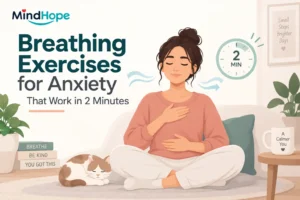
Anxiety Breathing (Physiological Sigh)
Scientifically proven to reduce anxiety rapidly. Double inhale → long exhale.
Need Professional Support?
Self-help is powerful, but sometimes we need a guide.
Our mentors are here to listen without judgment.
No pressure. Book only if you feel ready.
Free tools not quite enough?
Free resources are a great starting point, but lasting change requires a structured system. If you're tired of piecing together advice and want a complete step-by-step roadmap for your mental health, explore our premium toolkits.
Instant access. Private & secure. Starting at just ₹299.
Understand Yourself Better With Mental Health Self Assessments
Taking a mental health self assessment test helps you understand what’s happening beneath the surface — your emotions, patterns, and overall wellbeing. These tools are designed to give you quick clarity so you can notice early signs of stress, anxiety, or low mood before they begin affecting your daily life.
Whether you’re trying to check your current mental state or explore deeper concerns, a depression self assessment can help you identify how you’ve been feeling over the past few weeks and whether certain symptoms may need more attention.
Using a structured psychological self assessment empowers you with insights that many people overlook in their day-to-day routine, making self-awareness the first step toward better emotional health.


How Mental Health Self Assessment Tests Help You Gain Clarity
A mental health self assessment test is more than a simple questionnaire — it’s a guided reflection that helps you understand your emotions with clarity and access free online self help. It allows you to slow down, observe your symptoms, and see whether your feelings follow common psychological patterns.
If you’ve been experiencing low mood, loss of interest, or emotional changes, a depression self assessment test can help you understand whether your symptoms align with early signs of depression.
Together with a psychological self assessment, these tools give you a clearer view of what may be affecting your mental health, helping you decide your next step — whether that’s self-help, lifestyle adjustments, or professional support.
Science-Backed Psychological Self Assessments You Can Trust
Every psychological self assessment on MindHope is designed using science-backed questions that mirror clinically recognized screening formats. This ensures your results are trustworthy and helpful, even though they’re meant for awareness rather than formal diagnosis.
Using a mental health self assessment test on MindHope gives you a structured way to notice emotional patterns you might miss in daily life. And if your results show deeper concerns, a depression self assessment or depression self assessment test can provide a clearer view of mood-related symptoms.
These evidence-supported tools from MindHope empower you to take informed steps toward better mental health. If you feel you need deeper support after your assessments, you can easily contact our team for guidance on your next steps — whether that’s self-help resources or speaking with a professional.

Mental Health Blogs to Guide Your Journey






Frequently Asked Questions
What are self-help tools for mental health?
Self-help tools for mental health are guided resources designed to help individuals manage emotional and psychological challenges such as stress, anxiety, depression, overthinking, relationship conflicts, and career pressure. These tools may include assessments, journaling exercises, coping techniques, mindfulness practices, and structured guidance that support emotional well-being and self-awareness.
Can self-help tools help with anxiety and overthinking?
Yes, self-help tools can support people dealing with anxiety and overthinking by helping them identify thought patterns, manage stress triggers, and practice calming techniques. Regular use of guided exercises, breathing methods, and reflective activities may improve emotional control and mental clarity over time.
Are online self-help tools effective for depression and stress management?
Online self-help tools can be beneficial for managing mild to moderate stress and depressive symptoms when used consistently. They help individuals develop healthier coping strategies, improve emotional awareness, and build routines that support mental wellness. However, professional counselling may be recommended for severe or long-term mental health concerns.
How can self-help tools improve relationship and career challenges?
Self-help tools can help individuals better understand emotions, communication patterns, decision-making habits, and stress responses. For relationship concerns, they may improve communication and emotional balance. For career-related stress, they can assist with confidence building, goal clarity, work-life balance, and managing performance pressure.
When should someone seek professional counselling instead of only using self-help tools?
Professional counselling should be considered when emotional difficulties begin affecting daily life, relationships, sleep, work performance, or overall well-being. If feelings of anxiety, depression, stress, or hopelessness persist despite self-help efforts, speaking with a qualified mental health professional can provide deeper support and personalized guidance.
Are MindHope self-help tools confidential and easy to use?
MindHope self-help tools are designed to be simple, accessible, and user-friendly for individuals seeking mental wellness support online. Users can explore different self-help resources privately at their own pace to better understand and manage emotional challenges related to mental health, stress, anxiety, relationships, and personal growth.
What is a mental health self assessment test and how does it help?
A mental health self assessment test is a short set of science-backed questions that help you understand your emotional patterns, stress levels, and overall well-being. It’s designed for awareness, giving you clarity on whether certain feelings may need attention or further support.
Is a depression self assessment the same as a diagnosis?
No. A depression self assessment is meant for personal insight only. While it helps you recognize possible symptoms of depression, only a qualified mental health professional can provide a diagnosis. If your results raise concerns, you can always contact MindHope for guidance.
How often should I take a depression self assessment test?
You can take a depression self assessment test anytime you notice changes in your mood, energy, or motivation. Many people use it monthly or during emotionally challenging phases to track patterns.
What should I do if my results suggest high stress, anxiety, or depression?
If any assessment indicates higher concern, consider starting a session with a certified mentor on MindHope. You can also contact our team directly for clarity, guidance, or next steps tailored to your needs.
Are MindHope’s self-assessments suitable for students as well?
Absolutely. Students often benefit from quick psychological self assessments as they help identify stress, mood changes, or academic burnout early, allowing them to take the right supportive steps.