

Modern life moves at an intense pace. Many adults manage demanding careers, family responsibilities, financial pressures, and personal expectations at the same time. Staying busy often feels normal, and being productive is usually seen as a positive trait.
However, constantly pushing yourself without enough time to rest or process emotions can slowly lead to emotional burnout.
Emotional burnout is more than simple tiredness. It is a deeper form of exhaustion that affects your thoughts, feelings, and motivation. Over time it can make everyday tasks feel overwhelming and reduce your ability to enjoy things that once brought happiness.
Recognising emotional burnout early can help protect your mental wellbeing and restore balance in your life.
Understanding Emotional Burnout
Emotional burnout occurs when stress continues for a long period without enough recovery time. Instead of temporary fatigue, burnout creates a lasting sense of emotional and mental exhaustion.
When someone experiences burnout they may feel disconnected from their work, relationships, or personal goals. Even activities that once felt meaningful can begin to feel draining.
According to the World Health Organization, mental health conditions affect a significant portion of the global population and chronic workplace stress is one of the major contributors to burnout.
In India, work pressure is a major factor. A workplace survey conducted by Deloitte found that around 77 percent of professionals in India have experienced burnout at their current job at some point.
These findings show that emotional exhaustion is not uncommon. It is a growing concern in modern work environments.
Common Signs of Emotional Burnout
Burnout often develops gradually, which makes it difficult to identify in the beginning. Many people assume they are simply tired or dealing with temporary stress.
Some common signs include:
Emotional changes
People experiencing burnout may notice that their emotional energy feels depleted.
Common emotional symptoms include:
- feeling constantly exhausted even after resting
- losing interest in activities that once felt enjoyable
- feeling detached from work or relationships
- experiencing irritability or mood swings
Mental changes
Burnout can also affect concentration and thinking patterns.
Some common mental symptoms include:
- difficulty focusing on tasks
- frequent overthinking
- mental fatigue or lack of clarity
- feeling overwhelmed by routine responsibilities
Physical symptoms
Stress often affects the body as well. Burnout may lead to:
- sleep disturbances
- headaches or muscle tension
- reduced energy levels
- frequent fatigue
When these symptoms persist for several weeks or months, they may indicate emotional burnout rather than ordinary stress.
Why Emotional Burnout Is Increasing in India
Several lifestyle factors have contributed to increasing burnout levels across the country.
Increasing work pressure
Competitive work environments often require long hours and constant performance. Many professionals feel pressure to stay productive and available at all times.
Blurred work and personal life boundaries
Digital technology allows people to stay connected to work long after office hours. Messages, emails, and notifications make it difficult to completely disconnect.
Multiple responsibilities
Adults frequently manage professional roles alongside family duties, caregiving responsibilities, and financial planning. Managing many roles simultaneously can gradually drain emotional energy.
Limited conversations about mental health
Although awareness is improving, discussions about mental health still carry some stigma in many communities. As a result, people may suppress emotional struggles instead of talking about them openly.
Research also supports this connection between work stress and burnout. A study published in the Journal of Occupational Health Psychology found that prolonged job stress significantly increases the risk of emotional exhaustion and reduced wellbeing.
You can read the research here.
When Work Pressure Leads to Emotional Burnout
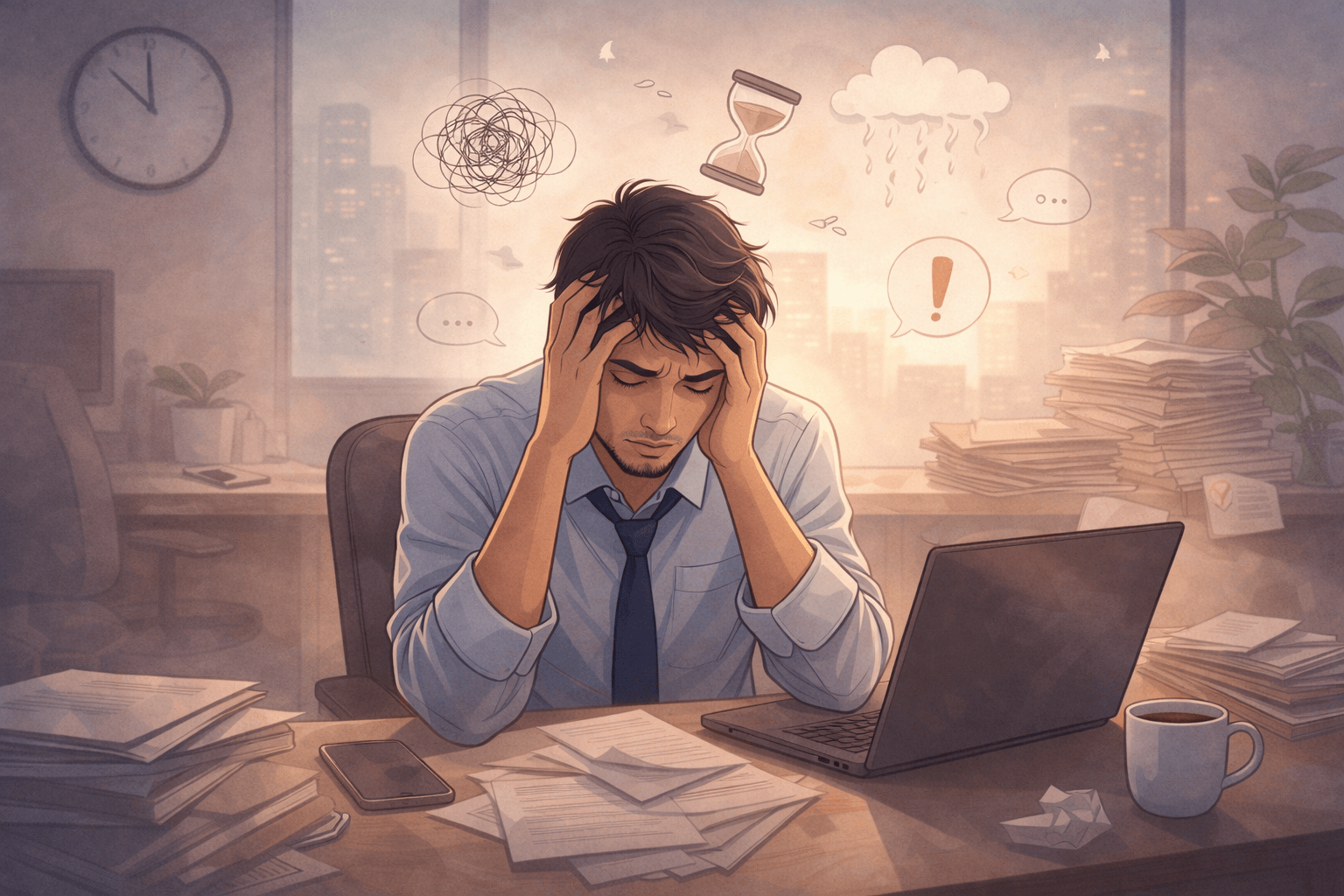
Case example (name changed for privacy)
Rahul, 36, software professional in Bengaluru
Rahul had always been committed to his work. He enjoyed solving complex problems and felt proud of his career progress.
However, over time his workload increased. Deadlines became tighter and expectations grew higher. Rahul began working late evenings and sometimes weekends to keep up with project demands.
Gradually he noticed several changes.
He felt tired most of the time even after getting enough sleep. Tasks that once felt exciting started feeling exhausting. He also found it difficult to concentrate during meetings and became more impatient with colleagues and family members.
Initially Rahul believed he simply needed a short vacation. But after several months the exhaustion did not improve.
After speaking with a trusted friend, Rahul realised that he might be experiencing emotional burnout. He began setting clearer work boundaries and prioritising rest. Over time these changes helped him slowly rebuild his emotional energy.
Stories like Rahul's are increasingly common among working professionals.
If you want to understand how work stress affects mental wellbeing, you can also read our article on stress management and emotional health on the Mindhope blog.
Practical Ways to Deal With Emotional Burnout
Recovering from burnout requires small but meaningful changes in daily habits and priorities.
Acknowledge emotional exhaustion
The first step is recognising that burnout exists. Ignoring stress and pushing yourself harder often makes the situation worse.
Accepting that your mind needs rest is an important step toward recovery.
Rebuild healthy boundaries
Setting limits between work and personal life helps protect emotional energy. This may involve avoiding work messages after certain hours or creating time that is reserved for relaxation.
Prioritise rest and recovery
Burnout often develops when recovery time is missing. Quality sleep, regular breaks, and time away from screens help the brain restore mental energy.
Engage in activities that recharge you
Hobbies, physical exercise, or creative activities allow the mind to shift away from constant stress. These activities often improve mood and mental clarity.
Strengthen social support
Talking with trusted friends, family members, or mentors can reduce feelings of isolation. Sharing experiences often makes challenges easier to manage.
You may also find it helpful to explore our blog on managing anxiety and overthinking, which discusses additional ways to reduce mental fatigue.
When Emotional Burnout Requires Professional Support
In some situations burnout can become severe enough to affect daily functioning.
If emotional exhaustion begins to interfere with sleep, relationships, or work performance, professional support may be helpful.
Mental health professionals can help individuals
- identify sources of chronic stress
- develop healthier coping strategies
- improve emotional resilience
- rebuild a balanced routine
Seeking guidance is not a sign of weakness. It is often an important step toward long term wellbeing.
If you would like to learn more about available support options, you can explore our guide on online mental health counselling in India on the Mindhope blog.
Preventing Burnout in the Long Term
While burnout can be challenging, it can also be prevented by building healthier routines.
Some helpful habits include:
- maintaining a balanced work schedule
- taking regular breaks during the day
- practicing relaxation or mindfulness techniques
- prioritising sleep and physical health
- discussing stress openly with supportive people
Building these habits allows individuals to handle challenges without reaching the point of emotional exhaustion.
Conclusion
Emotional burnout is becoming increasingly common in modern lifestyles. Many adults continue working through exhaustion without realising that constant stress is affecting their mental wellbeing.
Recognising the signs early and taking steps to restore balance can help prevent deeper mental health concerns.
Just as the body requires rest after physical effort, the mind also needs time to recover from emotional strain. Paying attention to mental wellbeing can make a meaningful difference in both personal and professional life.
If you feel mentally exhausted or overwhelmed, you do not have to handle everything alone.
Sometimes a simple conversation can provide clarity and emotional support.
If you feel mentally exhaustedm, a supportive conversation can help you understand your thoughts and explore healthier ways to cope.
Talk to a MindHope mentor