
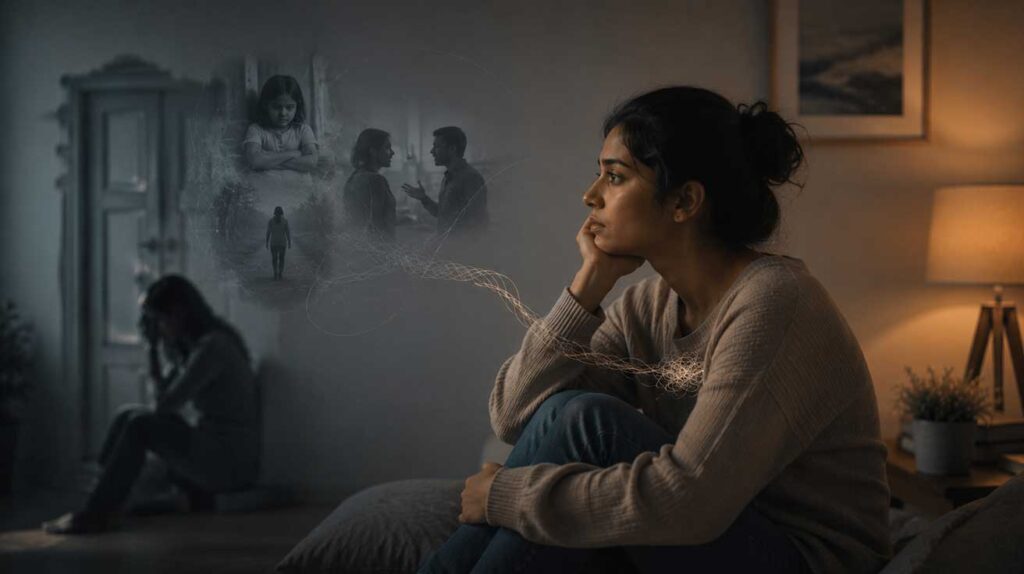
Many believe time heals all wounds. Time certainly helps make memories less vivid. But emotional wounds don't go away; instead, they are usually embedded in the mind and the body in a way that continues to affect how we think, feel and interact with other people.
I've heard many patients say things like:
- "I have no idea why I'm reacting this way."
- "It's been so long ago...but it still affects me."
That doesn't mean those two statements aren't true. That is how the human emotional system works.
What are emotional wounds?
An emotional wound is a type of psychological injury resulting from an individual experiencing painful and damaging experiences including but not limited to rejection, neglect, abuse, loss or being emotionally invalidated, that result in lasting influences on one's thoughts, feelings and behaviors.
These types of wounds could occur as a result of:
- Childhood experiences
- Relationship breakups
- Betrayal/abandonment
- Neglect
- Humiliation/rejection
Research conducted in The Lancet Psychiatry found that adverse childhood experiences (ACEs) substantially increased the risk for developing depression, anxiety and difficulty with emotional regulation into adulthood. In fact, ACEs were shown to increase a person's risk by 2 to 4 times depending on whether they had experienced them versus those who did not.
Why do Past emotional wounds remain active?
Unlike physical wounds, emotional wounds will not heal once the traumatic event has passed. In addition, although the event is now over, the emotional memory can stay active within the brain's memory systems.
1. The brain processes emotional memories differently
The amygdala (brain's "emotional" area) and hippocampus (memory area) process emotional experiences differently than neutral ones. This results in:
- emotional experiences are easier to retrieve as memories.
- a person may relive their previous emotions through current physiological responses.
- understanding rationally, does not necessarily decrease the emotional response to an experience.
2. Unexpressed/unresolved emotions do not automatically fade away
If emotions are not expressed or resolved at the time:
- they become suppressed;
- stored in unconscious memory;
- reactivated under similar conditions.
Therefore, a person may exhibit extreme reactions that appear disproportionate to the Present moment.
3. The body's nervous system develops protective response mechanisms
After repeated experiences involving fear or pain:
- the nervous system learns to be extremely alert;
- avoids exposing itself emotionally;
- reacts protectively (defensively) in situations where there is little danger.
While this appears to be excessive sensitivity/reactivity, it is actually learned survival behavior.
4. Current life situations activate old memory pathways
Similarities exist between Present day circumstances and Past experiences:
- tone of voice used by a partner;
- criticism received by a coworker;
- Feeling ignored/excluded.
These similarities stimulate old memory pathways related to emotional experiences.
5. Deep beliefs form early in life
Deep beliefs based on emotional wounds include:
- "i am not good enough"
- "eventually everyone leaves"
- "i cannot rely on anyone"
These beliefs quietly determine adult relationships and self-esteem.
How can I tell if my past is influencing how I feel now?
Even if your Past seems completely behind you, its potential emotional impact may still be alive inside you. Look for these signs in yourself:
Emotional indicators
- Intense emotional responses to seemingly minor triggers.
- Continuous sadness/anger without apparent reasons.
- Feeling "stuck" in particular emotional or behavioral scenarios.
Behavioral indicators
- Fearfulness/vulnerability to intimate or open relationships.
- Continually repeating similar relational patterns.
- Distrust of other People.
Cognitive indicators
- Preoccupation with Past occurrences.
- Blaming oneself/guilt due to Past experiences.
- Negatively speaking about oneself via memories of the Past.
Physiological indicators
- Stomach/chest tightness in response to emotional triggers.
- Sleep disruptions following emotional conflicts.
- Fatigue associated with stress from emotional states.
One important clinical observation is that the Feeling associated with the emotion seems older than the current situation.
The psychology behind emotional carryover
From a psychological perspective, unaddressed emotional experiences can lead to what is referred to as "emotional memory loops". These loops consist of:
- Trigger (current situation);
- Activation of Past memory (recalling an earlier memory);
- Automatic reaction (fear/anger/withdrawal);
- New experience reinforces old belief (reinforcing a previously held belief).
Case Study (Anonymous)
At age 34 a woman from Pune complained about recurrent problems within all of her relationships. The only reason for these recurring problems, she explained, was that if her partner took too long to reply to an instant message, she would become intensely fearful that he/she would abandon her.
Exploration showed that this fear of abandonment began when the woman's caregivers were emotionally negligent; their emotional availability varied significantly during her childhood.
Although this woman clearly understands the reasons behind her partner's behavior, the emotional responses she exhibits remain very intense and disturbing.
By way of therapy focused on emotional processing, attachment styles, and cognitions (cognitive restructuring), this woman slowly gained insight into how to differentiate between the emotional memories of the past and her perceptions of current realities. Consequently, over time the intensity of her reactions decreased and the stability of her relationships increased.
Why "just move on" does not work
One of the most widely misinterpreted concepts of emotional recovery is the idea that individuals need only "get over" their "emotional wounds."
However, emotional injuries are not merely memories — they are memories associated with physiological experience. Therefore, even though you might have forgotten what happened at a particular moment in time, your body has retained the memory of the physical sensations you felt during that experience.
As such, your reactions will continue to reflect those memories until the injury is processed in some manner. Thus, true healing involves acknowledging and working through the wound itself, as opposed to suppressing its effects.
In What Ways Do Unresolved Traumatic Experiences Affect Your Everyday Experience?
Unresolved traumatic experiences can affect many areas of one's everyday experience, including:
- Relationships
- Closeness/abandonment fears
- Recurring conflict patterns
- Trust issues with partners
- Self-esteem
- Chronic self-doubt
- Needing outside validation
- Fear of being rejected
- Decision-making
- Being overly cautious
- Fear of failing
- Avoiding risk
- Emotional regulation
- Intense emotional outburst
- Not being able to recover quickly from stimuli
- Easily becoming overwhelmed
What Really Goes On During Healing From An Unresolved Trauma
Unlike the idea that we heal because we erase painful events from our past, the truth is that we develop a new relationship with them. We learn to see them as something from which we can grow and learn.
There are five stages to learning to relate to your past in a healthy way:
1. Recognizing Patterns
Learning to identify your emotional responses to specific triggers without criticizing yourself.
2. Emotional Processing
Allowing yourself to acknowledge and process any suppressed emotions related to a traumatic experience.
3. Cognitive Restructuring
Questioning your outdated belief systems developed due to previous traumatic experiences.
4. Regulating Your Nervous System
Using techniques such as deep breathing exercises, grounding techniques and/or practicing mindfulness so that you can regulate your nervous system more effectively and reduce your reaction to stressful stimuli.
5. Working With A Therapist
CBT (Cognitive Behavioral Therapy), Schema Based Therapy, EMDR and Trauma Informed therapies can be beneficial approaches for creating a new relationship with your past.
Frequently Asked Questions
Why are old emotional memories so painful?
Old emotional memories stay painful because they are stored in your emotional center(s) in your brain, and these parts of your brain will fire off (reactivate) an emotion even though it has been a very long time since you have experienced that particular event or events.
Can my emotional wounds ever completely heal?
Yes, you can make significant progress with emotional wounds, however, what typically happens during the healing process is that your emotional wound does not go away completely; your wound heals enough that you experience less pain from those wounds.
Why do I react as if every little thing I am doing right now is connected to why I reacted so strongly to something else at some point in my life?
A trigger for your reaction today could be something very similar to a past emotional experience, thus triggering your body's stored response to that past experience.
Do I HAVE TO see a therapist to heal from an emotional wound?
No, you don't necessarily have to work through the emotional wounds with a therapist; however, working with a therapist can provide you with many tools to identify patterns within yourself, assist in processing all of the emotions related to your wounds, and break down all of the repeated patterns of behavior related to your emotional wounds.