

There are times when life looks completely normal from the outside, but inside, you have no idea where you are going.
You may still wake up in the morning. Go to work or college. Talk to your friends. Meet your responsibilities. Scroll through social media. Make plans for the weekend.
And yet, somewhere underneath all of that, you may keep returning to the same uncomfortable question: “Why do I feel lost in life?”
Maybe you do not know what you want anymore. Maybe the future that once seemed clear now feels uncertain. Or perhaps nothing is technically “wrong,” but life no longer feels meaningful in the way you expected it to.
Feeling lost can be confusing because it does not always come with one obvious reason. Sometimes it appears after a major change. Sometimes it develops slowly after months of stress. And sometimes you simply wake up one day and realise that you have been moving through life without feeling connected to where you are actually going.
If that is where you are right now, feeling lost does not automatically mean that you have failed, made the wrong choices, or fallen behind everyone else. Often, it means something inside you is asking for attention.
This guide explores what it really means to feel lost in life, why it happens, and how you can begin finding clarity without forcing yourself to suddenly “figure everything out.”
What Does Feeling Lost in Life Actually Feel Like?
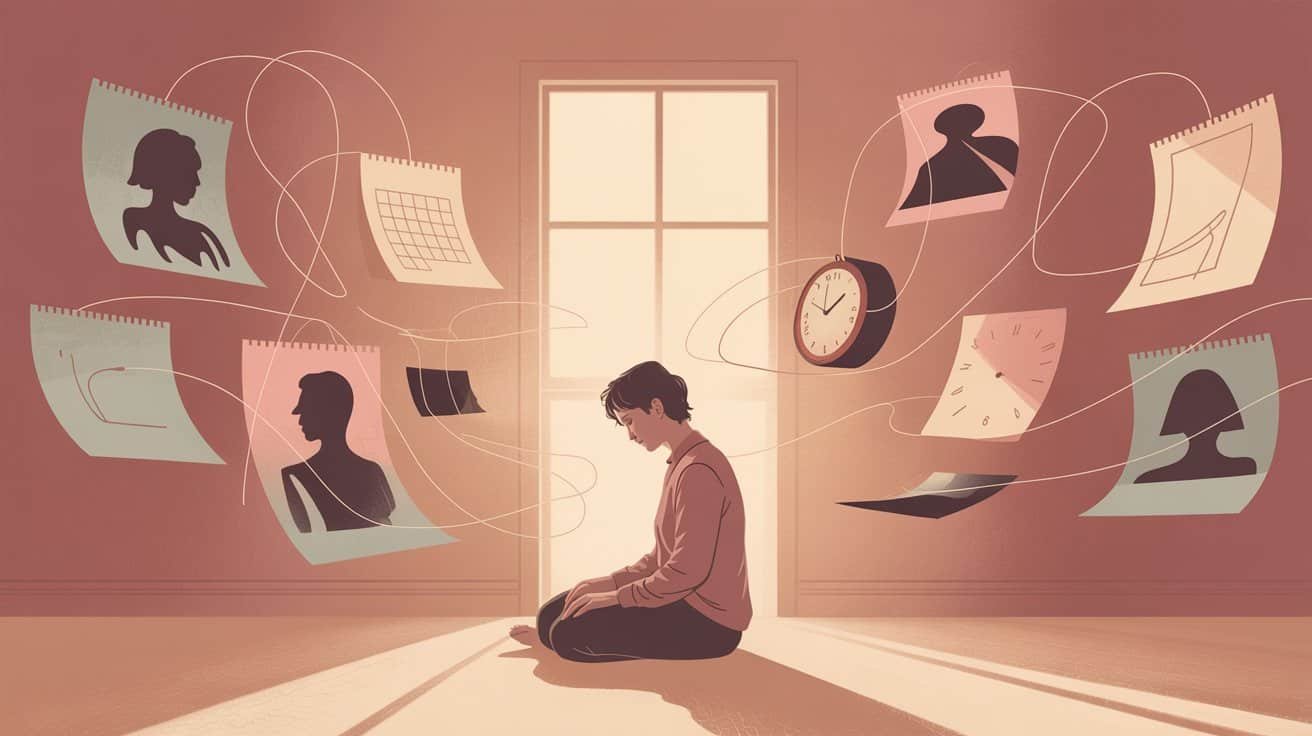
Feeling lost is not always dramatic.
For some people, it feels like confusion about the future. For others, it feels more like emotional emptiness. You may know what you are supposed to do next, but still have no desire to do it.
You might think:
- “I don't know what I want from my life anymore.”
- “Everyone else seems to know where they are going except me.”
- “I have achieved some things, so why do I still feel empty?”
- “What am I actually working toward?”
- “What if I make the wrong decision?”
- “I feel like I am just existing.”
Sometimes, feeling lost also looks like indecision. You keep changing your mind. You want to make a career decision but cannot commit to one option. You want to leave something behind but are afraid of what comes next.
At other times, you may not even be actively thinking about the future. You may simply feel disconnected from your own life. Days pass, responsibilities get completed, and somehow you are still unable to answer a simple question: “What am I doing all of this for?”
Feeling lost is not always about having no options. Sometimes, it is about having too many options, too much pressure, too many expectations, or too little connection with what you genuinely want.
This is why advice such as “just follow your passion” can sometimes feel frustrating. When you already feel confused, being told to discover one perfect direction may only create more pressure.
Clarity does not always begin with finding the answer. Sometimes, it begins by understanding why the question feels so difficult in the first place.
Why Do I Feel Lost in Life?
There is no single reason why someone feels lost. Usually, it is a combination of internal and external experiences.
Your circumstances may have changed. Your priorities may have changed. The version of you who made certain decisions years ago may not be the same person today.
You can also feel lost when you have spent a long time simply surviving. When life becomes focused on deadlines, responsibilities, financial pressure, relationships, or keeping everyone else happy, there may be very little space left to ask yourself what you actually need.
Below are some of the most common reasons people begin feeling directionless. You may relate strongly to one of them, or recognise a little of yourself in several.
1. You May Be Going Through a Life Transition
Many people feel lost during periods of change.
Finishing college. Starting a new job. Leaving a job. Moving to another city. Ending a relationship. Getting married. Experiencing financial changes. Watching friends move into different stages of life.
Transitions can remove the structure you were used to.
For years, you may have known exactly what the next step was. Finish school. Get into college. Finish college. Find a job.
Then suddenly, the roadmap becomes less clear. There may no longer be one obvious next milestone.
This can create a strange kind of emotional uncertainty. You are free to choose, but the number of choices can become overwhelming.
You may start asking whether you chose the right career. Whether you are with the right person. Whether you should move. Whether you should start something new. Or whether you have already wasted too much time.
The uncertainty itself is not necessarily the problem. The difficulty often comes from believing that you should already know the answer.
Life transitions can temporarily remove your sense of identity and direction because the version of life you understood has changed. It can take time to emotionally catch up with that change.
2. You May Be Living According to Other People's Expectations
Sometimes people feel lost because they have been following a path that never fully belonged to them.
This does not mean every decision was forced. You may have genuinely wanted certain things at one point. But expectations can quietly influence how we define success.
Family may have ideas about what a good career looks like. Society may define success through income, relationships, marriage, property, or status. Social media may constantly show you what you are supposedly supposed to achieve by a certain age.
Over time, it becomes easy to confuse:
- What you genuinely want
- What you were taught to want
- What other people expect from you
- What you are afraid of losing if you choose differently
You might achieve something you worked very hard for and then feel surprisingly empty afterward. Not because the achievement has no value, but because you never stopped to ask whether it was connected to your deeper priorities.
This can be especially difficult for young adults who are trying to build careers while also navigating family expectations, relationships, financial responsibilities, and their own changing identity.
Sometimes feeling lost is your mind's way of noticing a gap between the life you are living and the life that feels meaningful to you.
That gap does not need to be solved overnight. But noticing it can be an important first step.
3. Constant Comparison Can Make Your Own Life Feel Directionless
It is difficult to feel confident about your own path when you are constantly watching everyone else's.
One person is getting promoted. Another is travelling. Someone is getting married. Someone else has started a business. Another person appears to have their entire future planned.
When you see hundreds of carefully selected moments from other people's lives, your own unfinished journey can start looking like failure.
The problem is that comparison rarely gives you useful information about what you want. Instead, it often tells you what you are afraid of missing.
You may not actually want the career you envy. You may simply want the security that seems to come with it. You may not want someone else's relationship. You may want the sense of connection you imagine they have.
Understanding this difference matters.
When you feel behind, it can help to ask: “Do I actually want this, or am I afraid that I should?”
That one question can reveal whether a goal comes from genuine desire or social pressure.
Comparison can also trigger persistent thinking and second-guessing. If your mind constantly moves between different possibilities and worst-case scenarios, you may find it helpful to understand more about why overthinking can make decisions feel harder .
4. You May Be Emotionally or Mentally Exhausted
Sometimes you are not lost. You are simply tired.
This distinction can be important.
When someone has been carrying stress for a long time, their ability to think clearly about the future can become limited. Everything starts to feel equally difficult. Even decisions that once felt exciting can begin to feel like another responsibility.
You may tell yourself:
- “I need to find my purpose.”
- “I need to change my life.”
- “I need to figure out what I really want.”
But perhaps what you need first is rest, emotional space, or a chance to understand what has been draining you.
Emotional exhaustion can make life feel flat. You may struggle to feel motivated, curious, or excited about possibilities. That does not always mean you have chosen the wrong life. Sometimes, it means you have been carrying too much for too long.
You may recognise some of these experiences:
- You feel tired even after completing basic responsibilities
- Small tasks feel mentally heavy
- You keep postponing important decisions
- You feel detached from things you normally care about
- The future feels overwhelming rather than exciting
- You want to escape your responsibilities but do not know where to go
When this happens, trying to force yourself into a major life decision can sometimes create even more confusion. It may be more useful to first understand what is taking up so much of your emotional energy.
MindHope's resources around understanding and managing ongoing stress can also be useful when feeling directionless is closely connected with prolonged pressure and mental exhaustion.
5. Your Old Identity May No Longer Fit You
You may feel lost because you have changed.
The person you were five years ago may have wanted very different things. The career that once felt exciting may no longer feel meaningful. A relationship dynamic you once accepted may no longer feel right. Your priorities may have quietly shifted.
But changing your mind can feel frightening.
People often hold onto an old identity because it provides certainty. You know who you are supposed to be. You know what people expect from you. You know what your next step is supposed to look like.
Letting go of that identity can create a temporary feeling of emptiness. If you are no longer the person you used to be, who are you now?
This question can feel uncomfortable, but it is also a natural part of growth.
Not every period of uncertainty is a crisis. Sometimes, you are simply between versions of yourself.
The difficulty is that we often expect a new identity to appear immediately after the old one stops fitting. In reality, there can be a period in between where nothing feels fully certain yet.
That in-between stage can feel exactly like being lost. But being between directions is not the same as having no direction at all.
6. You May Be Thinking So Much That You Cannot Move Forward
Overthinking can create the illusion that more thinking will eventually produce the perfect answer.
You analyse every possible career. Imagine every future outcome. Replay previous mistakes. Try to predict what will happen if you choose option A instead of option B.
At first, this may feel responsible. You want to make a good decision. You do not want to regret anything.
But eventually, too much analysis can become another form of being stuck.
You may reach a point where every option has advantages and disadvantages, every decision has risks, and waiting for complete certainty prevents you from choosing anything at all.
This can leave you feeling directionless even when you actually have several possible paths.
The problem may not be a lack of options. It may be the belief that you need absolute certainty before taking the next step.
If this pattern feels familiar, you may want to explore support for persistent overthinking and the emotional patterns that make decisions feel heavier than they need to be.
7. You May Feel Disconnected From Yourself
When was the last time you asked yourself what you actually feel without immediately judging the answer?
Many people become highly skilled at functioning. They know what needs to be done. They know how to meet expectations. They know how to keep going.
But functioning and feeling connected to yourself are not always the same thing.
You can be productive while feeling disconnected. You can be surrounded by people while feeling alone. You can achieve goals while having no idea whether those goals still matter to you.
Over time, this disconnection can make it difficult to recognise your own preferences.
Someone asks, “What do you want?” And instead of having an answer, your mind goes blank.
This does not necessarily mean you do not have desires or values. It may mean you have spent so much time responding to external demands that you have had little opportunity to listen inwardly.
Reconnecting with yourself often begins with smaller questions than “What is my purpose?”
For example:
- What has been draining me recently?
- When do I feel most like myself?
- What am I tolerating that I no longer want to tolerate?
- What am I curious about, even if I am not ready to act on it?
- What part of my life feels meaningful right now?
You do not need to discover your entire future through one moment of reflection. Sometimes, clarity begins by noticing what is already true in the present.
8. Pressure to “Figure Out Life” Can Make You Feel More Lost
One of the most exhausting beliefs is that you are supposed to figure out your entire life at once.
You may feel pressure to know:
- Your perfect career
- Your long-term financial plan
- Who you want to be with
- Where you want to live
- What your purpose is
- What success means to you
Those are big questions. And expecting yourself to answer all of them perfectly can make any uncertainty feel like failure.
Life rarely provides one permanent answer. People change. Opportunities change. Responsibilities change. What feels meaningful at 22 may not feel meaningful at 32.
Direction is often adjusted while moving.
You do not always discover your path and then begin walking. Sometimes, you walk for a while and gradually understand which direction feels right.
You may not need a complete life plan right now. You may only need enough clarity to understand your next honest step.
9. You May Be Searching for Meaning, Not Just Direction
Sometimes people say they feel lost when what they really mean is: “I don't understand why any of this matters to me anymore.”
This is slightly different from not knowing what to do next.
You may know exactly what your next step should be. You may have a stable job, a routine, relationships, and responsibilities. But something still feels missing.
That feeling can be uncomfortable because it is difficult to explain to other people. From the outside, your life may appear fine. You may even feel guilty for being unhappy or directionless.
But emotional dissatisfaction does not always require a dramatic external reason. Sometimes, it is simply a signal that the way you are living no longer feels fully connected to what matters to you.
This is one reason why people can ask, “Why am I not happy even when life is good?”
Having things to be grateful for and wanting greater emotional meaning can exist at the same time. You do not need to prove that your life is objectively bad before allowing yourself to question whether something needs to change.
Understanding what is missing can take reflection. For some people, the missing piece is connection. For others, it is rest, autonomy, creativity, challenge, belonging, or the freedom to make choices that feel more authentic.
There is no universal answer to what makes a life meaningful. That is why copying someone else's definition of success rarely creates lasting clarity.
The question is not always: “What should I do with my life?”
Sometimes, a more useful question is: “What kind of life feels worth showing up for right now?”
Feeling Lost Does Not Mean You Have Failed
If you feel lost in life, it can be tempting to look around and assume everyone else has already figured things out.
But many people move through periods of uncertainty that are invisible from the outside. Some are questioning their careers. Some are grieving an old version of themselves. Some are exhausted. Some are simply growing beyond a life that once made sense.
Feeling lost can be painful. But it can also become a point of reflection.
Instead of immediately asking yourself to solve your entire future, it may help to slow down and understand what your confusion is trying to tell you.
In Part 2, we will look at what you can actually do when you feel lost, including how to stop putting pressure on yourself to have all the answers, how to identify what is creating the feeling of being stuck, and how small actions can gradually create a stronger sense of direction.
How to Start Finding Your Way Again When You Feel Lost
When you feel lost in life, the natural reaction is often to search for a big answer.
You may feel that you need to discover your purpose, choose the perfect career, fix your relationships, become more productive, or suddenly understand exactly what you want.
But trying to solve your entire life at once can make the feeling of being lost even heavier.
Clarity usually does not arrive as one dramatic moment where everything suddenly makes sense. For many people, it develops gradually.
You notice something that no longer feels right. You understand a pattern you had been ignoring. You try something new. You learn from it. Then the next step becomes slightly clearer.
Finding your way again is often less about discovering a perfect answer and more about slowly reducing the confusion between where you are, what you need, and what matters to you.
Start With the Present Instead of Your Entire Future
If someone asked you to plan the next ten years of your life right now, you might feel overwhelmed. There are simply too many things you cannot predict.
Instead of asking:
“What am I supposed to do with my life?”
Try asking smaller questions:
- What feels difficult in my life right now?
- What has been draining most of my energy?
- What am I avoiding?
- What do I wish was different?
- What is one area of my life that needs more attention?
- What is one thing I already know I do not want anymore?
Sometimes it is easier to identify what is no longer working than to immediately identify your ideal future.
You may not know your dream career, but you may know that your current environment is exhausting you. You may not know exactly what you want from relationships, but you may know that you no longer want to feel constantly unheard.
That information matters.
Clarity often begins with recognising what is already true.
Identify What Is Actually Making You Feel Stuck
The feeling of being lost can have many different causes. That is why generic advice does not always help.
For one person, the problem may be career uncertainty. For another, it may be emotional exhaustion. Someone else may be grieving the end of a relationship or struggling with constant pressure to meet other people's expectations.
Before trying to fix the feeling, it can help to understand what is underneath it.
You can start by looking at different areas of your life.
Career and Financial Direction
Ask yourself whether your work feels difficult because you are genuinely unhappy with the direction, or because you are currently exhausted by the demands of it.
These can feel similar, but they are not always the same.
You may need a completely new direction. Or you may simply need better boundaries, rest, or a more sustainable environment.
Relationships and Connection
Feeling lost can also appear when your relationships change.
A breakup, emotional distance, loneliness, or conflict with important people can affect how you see your entire life.
Relationships often provide routines, identity, and a sense of belonging. When those things change, you may temporarily lose your emotional sense of direction too.
If relationship patterns are contributing to your confusion or emotional stress, exploring relationship guidance and support may help you understand what is happening without reducing everything to who is right or wrong.
Stress and Emotional Pressure
Sometimes the feeling of being stuck is simply what prolonged pressure feels like from the inside.
You may have been trying to manage too many responsibilities for too long. Eventually, your mind may stop focusing on possibilities and start focusing only on getting through the day.
When that happens, thinking about the future can feel impossible.
Understanding the role of stress can be an important part of finding clarity. MindHope also offers resources and guidance around ongoing stress and emotional pressure for people who feel mentally overwhelmed by the demands of daily life.
Persistent Worry and Overthinking
You may know what you want to do but still feel unable to move.
Every possible choice creates another question.
What if it does not work? What if you regret it? What if there is a better option? What if you disappoint someone?
Eventually, thinking becomes so intense that doing nothing can feel safer than making an imperfect decision.
If this sounds familiar, the problem may not be that you have no direction. You may be struggling to trust yourself enough to take the next step.
This is one reason persistent thinking patterns can leave people feeling emotionally stuck. You can explore more about overthinking and emotional clarity if constant analysis is making decisions difficult.
Reconnect With What Actually Matters to You
When you feel lost, people often search for a goal.
But goals can change. Values are often more stable.
A goal might be to get promoted. A value might be growth, independence, security, creativity, or contribution.
Understanding your values can help you make decisions even when you do not have a complete plan.
For example, imagine that you are unsure whether to change careers. You may not know which exact job you want. But perhaps you know that you value:
- Freedom
- Learning
- Financial stability
- Meaningful work
- Flexibility
- Connection with people
Those values can become a useful filter.
Instead of asking, “Which option is perfect?” you can ask:
“Which direction feels more aligned with what matters to me?”
This does not guarantee that every decision will be correct. But life rarely offers guarantees.
What values can offer is a stronger internal reference point, especially when external opinions and expectations are pulling you in different directions.
Take Small Actions Before You Feel Completely Ready
One of the biggest mistakes people make when they feel lost is waiting for complete clarity before taking any action.
But clarity and action often work together.
You try something. You learn whether it suits you. You adjust. Then you understand more than you did before.
You do not have to resign from your job tomorrow to explore another career. You might take a course, speak to someone working in that field, build a small project, or spend time understanding what the work actually involves.
You do not need to know whether a new interest will become your life's purpose. You can simply explore it.
Small actions are useful because they give you real information.
Thinking about a possible future can only tell you so much. Experience often tells you more.
You do not always need confidence before taking the next step. Sometimes confidence develops because you took a small step and realised you could handle what came next.
The goal is not to make a dramatic decision simply because you are tired of feeling stuck. The goal is to create movement without demanding certainty.
Stop Using Other People's Timelines as Evidence That You Are Behind
Feeling lost often becomes worse when you turn it into a comparison.
You see someone your age earning more. Someone else is married. Another person has started a business. Someone seems completely certain about their future.
It is easy to turn these observations into a story about yourself:
“They are moving forward. I am behind.”
But life is not experienced on one universal timeline.
The person who appears certain today may later change direction. The person who feels behind today may discover an opportunity that changes everything. Someone who reaches a milestone early may still experience uncertainty afterward.
Achievements do not permanently remove confusion.
Instead of asking whether you are ahead or behind, it may be more useful to ask:
“Am I moving toward something that matters to me, even if slowly?”
Progress does not always look impressive from the outside. Sometimes it looks like setting a boundary. Taking rest seriously. Learning something new. Leaving an unhealthy pattern. Finally admitting that something is not working.
These can all be forms of movement.
Give Yourself Enough Mental Space to Hear Yourself
It can be difficult to understand what you want when your mind is constantly occupied.
Notifications. Work. Family expectations. Social media. Financial concerns. Messages. Responsibilities.
When every quiet moment is immediately filled with another distraction, there is little opportunity to notice what is actually happening inside you.
Creating mental space does not mean disappearing from your responsibilities. It can simply mean becoming more intentional about moments of reflection.
You might try:
- Writing down recurring thoughts instead of repeatedly carrying them mentally
- Taking a walk without constantly consuming content
- Reducing comparison-triggering social media when it makes you feel worse
- Spending time alone without treating solitude as a problem to fix
- Noticing which activities leave you feeling more present
- Paying attention to patterns in your energy and emotions
The goal is not to force yourself to discover a purpose during one quiet evening.
It is simply to create enough space for your own thoughts to become clearer.
You Do Not Need to Find One Perfect Purpose
The idea that everyone has one perfect purpose can create unnecessary pressure.
What if you choose the wrong thing? What if you have several interests? What if your purpose changes?
For many people, meaning is not one fixed destination. It can come from different parts of life at different times.
Work may feel meaningful. Relationships may feel meaningful. Creating something may feel meaningful. Helping others, learning, raising a family, solving problems, travelling, or simply building a peaceful life can all matter.
You are allowed to have more than one source of meaning.
You are also allowed to change.
The pressure to discover one permanent answer can make normal uncertainty feel like a personal failure. Instead of searching for one sentence that explains your entire existence, try noticing what currently gives your life a sense of depth, connection, or purpose.
That answer may evolve. And that is okay.
When Does Talking to Someone About Feeling Lost Help?
Sometimes personal reflection is enough to help you understand a period of uncertainty. But sometimes your thoughts feel too tangled to organise alone.
You may keep reaching the same conclusions. You may talk to friends but still feel misunderstood. Or you may avoid discussing certain things because you do not want to worry your family or burden the people around you.
A neutral conversation can sometimes create space to look at your situation differently.
The purpose is not for someone else to tell you exactly what to do with your life. No one else can choose your direction for you.
But an experienced and neutral person may help you:
- Understand what is contributing to your confusion
- Separate your own desires from external expectations
- Notice recurring emotional patterns
- Explore difficult decisions without immediate pressure
- Organise thoughts that currently feel overwhelming
- Identify small next steps instead of demanding a complete life plan
If you are unsure whether what you are experiencing relates to stress, relationships, anxiety, overthinking, emotional exhaustion, or another area of life, you can also explore the different areas MindHope can support and guide you with .
Sometimes the first step is not finding the solution. Sometimes it is simply understanding the problem more clearly.
When Feeling Lost Starts Affecting Daily Life
Feeling uncertain about life is a common human experience. But if the feeling becomes persistent and starts significantly affecting your ability to manage daily life, relationships, work, or your sense of safety, it may be important to seek appropriate professional support.
This is especially important if feeling lost is accompanied by intense hopelessness, severe emotional distress, or thoughts of harming yourself.
You do not have to handle overwhelming experiences entirely alone. Reaching out to a qualified mental health professional or an appropriate local emergency or crisis service can provide more immediate support when needed.
The goal of this article is not to label normal uncertainty as something wrong. It is to recognise that there is a difference between a temporary period of confusion and distress that is becoming difficult to manage.
The Truth About Feeling Lost in Life
Perhaps the most difficult part of feeling lost is believing that you should not be.
You may believe that by a certain age you should know what you want. You should have a clear career. A stable relationship. A complete plan. A strong sense of identity.
But human lives are rarely that linear.
You will outgrow things. You will change your mind. Some plans will work and others will not. You may discover parts of yourself later than expected.
Feeling lost does not automatically mean you are moving in the wrong direction. Sometimes it means the old direction no longer feels right, and the new one has not become clear yet.
That space in between can feel uncomfortable. But it can also be where reflection begins.
You do not need to solve your entire life today.
You may only need to understand what feels heavy. What feels disconnected. What you have outgrown. What matters to you. And what one small, honest step might look like from where you are now.
Direction can become clearer gradually.
You do not have to have every answer before you begin moving.
Frequently Asked Questions
Why do I feel lost in life even though everything is okay?
Feeling lost does not always require an obvious problem. You may have stability in some areas of life while still feeling disconnected from your goals, identity, values, or sense of meaning. Sometimes the feeling develops during periods of personal change or prolonged emotional pressure.
Is it normal to feel lost in your 20s?
Yes. Your 20s often involve major changes in career, relationships, independence, finances, and identity. Many people experience uncertainty while adjusting to these changes and discovering what matters to them personally.
How do I find direction when I feel completely lost?
Start with smaller questions rather than trying to plan your entire future. Identify what is currently draining you, what no longer feels right, what matters to you, and one small action you can take to learn more about a possible direction.
Why do I feel stuck and unable to make a decision?
Feeling stuck can happen when there is too much pressure to make the perfect choice, fear of making mistakes, emotional exhaustion, or persistent overthinking. Understanding what is creating the pressure can make the next step easier to see.
Can stress make you feel lost in life?
Yes. Prolonged stress and emotional exhaustion can make it harder to think clearly, feel motivated, and connect with future goals. Sometimes rest and emotional support are needed before major decisions become easier to evaluate.
Should I talk to someone if I feel lost in life?
Talking to a neutral and experienced person can be helpful when your thoughts feel difficult to organise alone. A supportive conversation can help you explore your situation, understand emotional patterns, and identify possible next steps without someone else making decisions for you.
Feeling lost does not mean you need to have all the answers right now. Sometimes, what helps most is having space to understand what you are feeling without being judged, rushed, or told what your life should look like.
If you are dealing with overthinking, stress, relationship difficulties, anxiety, emotional exhaustion, or simply feel unsure about what is happening in your life, exploring the right kind of support can be a useful first step.
You can explore the different challenges MindHope helps people work through and find the area that feels most relevant to what you are experiencing.
Talk to a MindHope mentor