
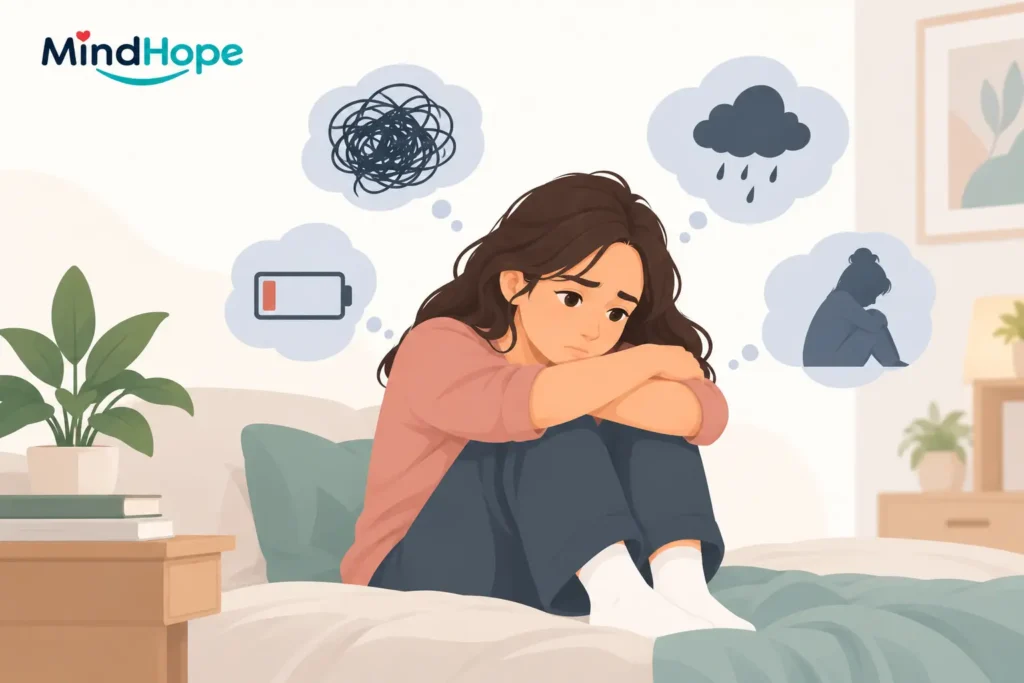
It is not always easy to tell when someone is depressed. Depression does not always look the way we expect it to. It is not always visible sadness or tears. Sometimes it looks like someone who is quieter than usual. Someone who has stopped replying to messages. Someone who still comes to work, still meets their responsibilities, but seems somehow absent from their own life.
If you have found yourself wondering whether someone you care about might be depressed a friend, a family member, a colleague that concern is worth taking seriously.
This article explains what depression actually looks like in everyday life, the signs to watch for, how to tell the difference between sadness and clinical depression, and how to approach someone you are worried about.
What Is Depression?
Depression is a mood disorder characterised by persistent low mood, loss of interest or pleasure in daily activities, and a range of emotional, physical, and cognitive changes that affect how a person thinks, feels, and functions.
It is not the same as feeling sad after a difficult event, or going through a hard week.
Clinical depression also called major depressive disorder involves symptoms that last for at least two weeks, are present most of the day, and significantly affect the person’s ability to function in their everyday life.
According to the World Health Organization, depression affects over 280 million people globally and is one of the leading causes of disability worldwide. In India, the National Mental Health Survey estimated that one in twenty Indians experiences depression at some point in their lifetime, with many never receiving any form of support.
Why Depression Is Easy to Miss
Depression is often invisible to the people around the person experiencing it.
This is partly because many people with depression continue to function. They go to work. They attend family events. They respond to messages. From the outside, nothing seems obviously wrong.
It is also because in India, expressions of emotional distress are often internalised. There is significant pressure to appear capable and composed, particularly for men, for people in caregiving roles, and for anyone in a family or work environment where mental health is not openly discussed.
And depression itself can make people feel that they do not deserve support, or that what they are experiencing is not serious enough to mention. This makes it even less likely that someone who is depressed will say so directly.
This is why the signs that appear in behaviour, physical health, and daily patterns rather than verbal disclosure are often the most important things to notice.
Emotional Signs of Depression
The emotional experience of depression is more varied than most people expect.
It is not always visible sadness. Some people describe it as feeling nothing at all a flatness or emptiness that is harder to name than grief or distress.
Emotional signs to watch for include:
Persistent low mood
A sense of sadness, emptiness, or hopelessness that does not lift over time. This is not tied to a specific event and does not ease the way ordinary sadness does. The person may describe feeling as though something is permanently wrong, or that things will not improve.
Loss of interest or pleasure
One of the most characteristic signs of depression is a loss of interest in things the person previously enjoyed. Hobbies, social activities, work, or relationships that once engaged them may now feel pointless, effortful, or simply irrelevant. This is sometimes called anhedonia.
Irritability or restlessness
Not everyone with depression feels sad. Particularly in men and young people, depression can present primarily as irritability, frustration, or emotional reactivity that seems disproportionate to the situation. The person may snap more easily, become easily frustrated, or seem generally unsettled.
Feelings of worthlessness or guilt
A person who is depressed may express negative beliefs about themselves that they are a burden, that they are failing at everything, that others would be better off without them. These beliefs tend to be persistent, generalised, and resistant to reassurance.
Difficulty experiencing positive emotions
Even during genuinely positive events celebrations, good news, time with people they care about a person with depression may feel unable to feel pleasure or happiness. They may describe going through the motions while feeling emotionally absent.
Physical Signs of Depression
Depression has real and often overlooked physical manifestations.
In India, it is common for depression to present primarily through physical complaints, because physical symptoms feel more legitimate to report than emotional ones. People may visit doctors repeatedly for headaches, digestive problems, or fatigue without a physical cause being found.
Fatigue and low energy
A persistent tiredness that does not improve with rest. Simple tasks feel disproportionately exhausting. Getting out of bed, preparing food, or responding to a message can feel like significant effort.
Changes in sleep
Depression commonly disrupts sleep in one of two ways: difficulty falling or staying asleep, and early morning waking when the mind becomes active and distressing or sleeping significantly more than usual, using sleep as a way of escaping from difficult feelings.
Changes in appetite and weight
Some people with depression lose interest in food and eat considerably less. Others experience increased appetite, particularly for comfort foods. Both can result in noticeable weight changes over weeks or months.
Unexplained physical pain
Persistent headaches, muscle aches, back pain, or digestive problems with no clear medical cause can be physical expressions of depression. These symptoms are real and are not fabricated, but they reflect the way emotional distress manifests in the body.
Neglect of personal hygiene
A noticeable decline in personal care not washing, not changing clothes, not maintaining routines the person previously kept can be a sign that the depression has reached a point where basic self-care feels overwhelming or pointless.
Behavioural Signs of Depression
Changes in behaviour are often the most visible signs of depression to the people around someone.
Withdrawing from people
A person who is depressed often begins to withdraw from social contact. They cancel plans, stop initiating contact, take longer to reply to messages, or give vague reasons for not being available. This withdrawal is often gradual rather than sudden.
Reduced performance at work or study
Difficulty concentrating, making decisions, and remembering information are core cognitive symptoms of depression. At work or in studies, this may appear as missed deadlines, reduced quality of output, increased mistakes, or frequent sick days.
Neglecting responsibilities
Things the person previously managed household tasks, finances, commitments to others may begin to be neglected. This is not laziness or disorganisation. It reflects the significant cognitive and motivational impact depression has on daily functioning.
Increased use of alcohol or other substances
Some people with depression use alcohol, substances, or other forms of escapism excessive screen use, gambling to manage or numb their emotional state. A noticeable increase in drinking or other avoidance behaviours can be a signal worth paying attention to.
Talking about death or hopelessness
Comments that express a wish not to exist, a sense that the future is hopeless, or references to death or disappearing should always be taken seriously. These may be expressed directly or indirectly, and they are a sign that the person needs support.
How Depression May Look Different in Different People
Depression does not present the same way in every person.
In men
Men with depression are more likely to present with irritability, anger, or risk-taking behaviour than with visible sadness. They may increase their working hours, take up physically demanding activities, or use alcohol to manage what they are experiencing. Depression in men is significantly underdiagnosed for this reason.
In women
Women are more likely to describe feelings of sadness, guilt, and worthlessness. Depression in women is also more commonly associated with anxiety, and with disruptions to sleep and appetite.
In elderly people
In older adults, depression frequently presents as physical complaints, memory difficulties, or what looks like social withdrawal or loss of interest in life that can be mistakenly attributed to ageing. It is significantly underrecognised and undertreated in this age group.
In young people and students
Depression in young people can look like academic decline, irritability, social withdrawal, changes in sleep patterns, increased time spent alone online, or a sudden loss of interest in activities and friendships that previously mattered to them.
The Difference Between Sadness and Depression
| Sadness is a normal emotional response to loss, disappointment, or difficult circumstances. It is connected to a cause, it changes over time, and it tends to lift as circumstances or feelings evolve.Depression is persistent. It is present for weeks or months, often without a single clear cause. It does not reliably lift when circumstances improve. It affects how the person thinks, functions, and experiences the world not just how they feel in a given moment.The key indicators are duration, pervasiveness, and impact on daily life. Sadness is painful but does not typically prevent someone from functioning. Depression does. |
Case Study (Anonymised)
| Case StudyA 34-year-old software engineer from Hyderabad was referred to counselling by his manager after a period of declining performance and frequent absences. His colleagues had noticed that he had become quieter over several months. He had stopped joining team lunches, began submitting work late, and gave brief replies to messages that previously would have prompted longer conversations.When asked how he was, he consistently said he was fine. He was not aware that his behaviour had changed significantly. He described feeling tired all the time, waking at 4 AM with a sense of dread, and feeling that nothing he did made any difference.He had not told anyone because he did not believe what he was experiencing was serious. “I thought I was just burnt out,” he said. “I kept thinking I just needed a holiday.”During assessment, he met the clinical criteria for moderate depression. He had been experiencing symptoms for approximately seven months.Following a period of Cognitive Behavioural Therapy (CBT) and, after psychiatric consultation, a short course of medication, he reported significant improvement within ten weeks. He reflected that the withdrawal and fatigue had felt so gradual that neither he nor the people around him had recognised it as depression until it was well established. |
How to Approach Someone You Are Worried About
If you are concerned that someone may be depressed, how you approach them matters.
Choose a private, calm moment
Avoid bringing it up in a group, or in the middle of a difficult moment. Find a time when you are alone with them and there is no immediate pressure.
Be specific and gentle, not diagnostic
Rather than saying “I think you are depressed,” describe what you have noticed. “I’ve noticed you seem quieter lately and you’ve cancelled a few plans I just wanted to check in.” This is easier to receive and harder to dismiss.
Listen more than you speak
The goal of the conversation is not to fix or advise. It is to create space for the person to feel heard without judgment. Resist the urge to offer solutions immediately.
Avoid minimising or comparing
Phrases like “just push through it” or “everyone feels like this sometimes” are well-intentioned but tend to make people feel that their experience is not valid. Instead, acknowledge what they have said: “That sounds really hard.”
Suggest support without pressure
You might gently mention that speaking to a professional could help, and offer to help them find options if they are open to it. Do not push if they are not ready, but leave the door open.
If the person you are worried about is in India and you are looking for where to direct them, MindHope’s counselling offers a starting point, including a free first session that removes the financial barrier to beginning.
When to Act Urgently
| If you notice any of the following, act immediately: The person has expressed a wish to die, mentioned suicide, or is talking about not wanting to exist. The person has spoken about harming themselves. The person has made statements suggesting they believe others would be better off without them. In these situations, do not wait and do not leave them alone. Contact Tele-MANAS on 14416 (available 24 hours, in 20 languages), or take them to the nearest hospital emergency department. |
You do not need certainty to act. If you are concerned, say so. Asking someone directly if they are thinking about suicide does not plant the idea it creates permission to speak honestly.
Key Takeaways
| Depression does not always look like visible sadness. It can appear as withdrawal, irritability, fatigue, or numbness.Emotional signs include persistent low mood, loss of interest, worthlessness, and difficulty experiencing positive emotions. Physical signs include fatigue, sleep disturbance, appetite changes, and unexplained pain. Behavioural signs include social withdrawal, reduced functioning at work, neglecting responsibilities, and increased substance use. Depression presents differently in men, women, older adults, and young people. The key distinction from sadness is duration, pervasiveness, and impact on daily functioning.How you approach someone matters: specific observations, gentle curiosity, and listening without judgment are more effective than advice or minimising.Statements about not wanting to exist or about suicide should always be treated as urgent. |
When Should You Seek Professional Help?
Encourage someone to seek professional support if their symptoms have been present for more than two weeks, are affecting their ability to work, maintain relationships, or care for themselves, or if they have expressed hopelessness or thoughts of death.
If they are reluctant, remind them that speaking to someone is not a commitment to anything. A single conversation with a psychologist can help clarify what they are experiencing and what might help.
The main difference is duration and impact. Everyone experiences difficult periods and low mood. Depression is characterised by symptoms that persist for at least two weeks, are present most of the day, and significantly affect the person’s ability to function. If someone has been struggling for more than two weeks and it is affecting their daily life, it is worth taking seriously.
Yes. High-functioning depression is real. Some people maintain their external responsibilities while experiencing significant internal distress. They may appear fine at work or in social situations, while struggling significantly in private. The absence of visible distress does not mean the person is not depressed.
“Just be positive.” “Everyone goes through this.” “You have so much to be grateful for.” “Push through it.” These phrases, however well-intentioned, tend to make a depressed person feel that their experience is not valid or that they are failing to manage something ordinary. Instead, simply acknowledge what they have said and ask how you can support them.
You cannot force someone to seek help, and taking on full responsibility for another person’s mental health is not sustainable. What you can do is express concern, listen without judgment, share information about available support, and remain present. If you believe the person is at immediate risk, contacting emergency services or a crisis helpline is the appropriate step.
Tele-MANAS is a free 24-hour mental health helpline operated by the Government of India. The number is 14416. It is available in 20 languages and can provide immediate support, guidance, and referrals to mental health services.
Mild depression sometimes resolves over time, particularly when it is linked to a specific life situation that improves. However, moderate to severe depression, and depression that has persisted for several months, significantly benefits from structured professional support. Without treatment, depression tends to become more entrenched over time and can be more difficult to address.
Sources
1. World Health Organization (2023) Depression fact sheet: 280 million affected globally https://www.who.int/news-room/fact-sheets/detail/depression
2. HelpGuide (2026) Depression Signs and Symptoms: Recognizing and Understanding Depression https://www.helpguide.org/articles/depression/depression-symptoms-and-warning-signs.htm
3. National Institute of Mental Health Depression: Signs, Symptoms, and Treatment https://www.nimh.nih.gov/health/topics/depression
4. PMC / Journal of Athletic Training (2015) Depression Signs and Symptoms table (DSM-based clinical presentation) https://pmc.ncbi.nlm.nih.gov/articles/PMC4477918/
5. National Mental Health Survey of India 2015-16 (NIMHANS/Gururaj et al.) Prevalence of depression in India https://www.ncbi.nlm.nih.gov/pmc/articles/PMC9479914/