
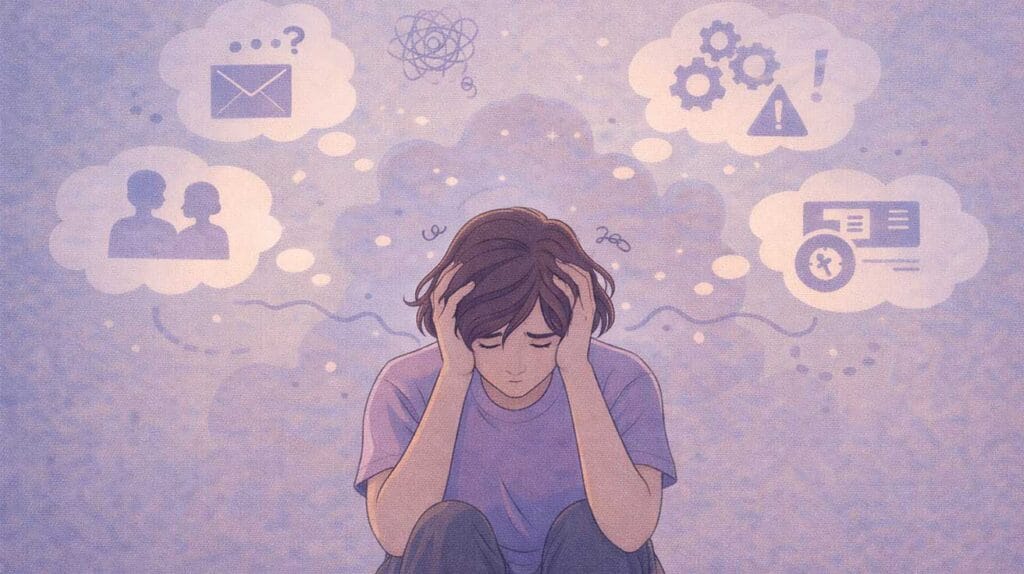
Many people experience moments when their thoughts refuse to slow down. A small decision becomes a long internal debate. A short message from a colleague turns into hours of speculation. A simple conversation is replayed repeatedly in the mind.
This pattern is commonly known as overthinking. While occasional overthinking is normal, persistent overthinking is often closely linked with anxiety.
In India, increasing work pressure, digital overload, and social expectations have created environments where many adults find themselves trapped in cycles of worry and mental analysis.
Understanding the connection between anxiety and overthinking can help people recognize emotional patterns and find healthier ways to manage their thoughts.
Understanding Overthinking
Overthinking occurs when the mind repeatedly analyses the same situation, often searching for certainty or reassurance.
Instead of helping solve a problem, the thinking process becomes repetitive and exhausting. Individuals may replay past conversations, imagine worst case scenarios, or constantly question their decisions.
Overthinking often appears in two forms.
Rumination
This involves repeatedly thinking about past events such as mistakes, arguments, or embarrassing moments.
Worry based thinking
This involves imagining future problems and trying to mentally prepare for situations that may never happen.
Both forms are strongly linked with anxiety.
Anxiety and Overthinking in India
Mental health research shows that anxiety related conditions are increasingly common in India.
According to the National Mental Health Survey of India, nearly one in seven Indians experiences some form of mental health condition, with anxiety disorders being among the most common concerns.
Another report from the World Health Organization estimates that around thirty eight million people in India live with anxiety disorders.
These numbers indicate that many individuals may be experiencing patterns of worry and overthinking without fully understanding their connection to anxiety.
Why Anxiety Often Leads to Overthinking
Anxiety affects the brain's threat detection system. When the mind perceives uncertainty or potential risk, it tries to analyse situations repeatedly in an attempt to gain control.
Several psychological processes explain why anxious minds overthink.
The brain searches for certainty
Anxiety makes the brain uncomfortable with uncertainty.
To reduce this discomfort, the mind starts analysing situations again and again. It tries to find the perfect explanation or the safest possible decision.
However, real life rarely provides complete certainty, which means the thinking cycle continues.
The mind focuses on possible threats
People experiencing anxiety often become highly sensitive to potential problems.
Even neutral events may be interpreted as signs of risk.
For example, if a colleague replies briefly to a message, an anxious mind may wonder:
Did I say something wrong
Are they upset with me
Did I make a mistake at work
This constant threat scanning can lead to hours of unnecessary mental analysis.
Emotional memory becomes stronger
When someone experiences anxiety frequently, the brain becomes more likely to remember negative experiences.
This pattern makes individuals replay past mistakes or uncomfortable moments.
Over time, this mental replay strengthens the habit of rumination.
Decision making feels overwhelming
Anxiety can make simple decisions feel unusually difficult.
Instead of trusting their judgment, individuals may analyse every possible outcome before taking action.
This process often results in delayed decisions and increased stress.
Signs That Anxiety Is Causing Overthinking
Overthinking connected with anxiety often appears through specific behaviours.
Common signs include:
- replaying conversations long after they have ended
- imagining worst case scenarios frequently
- difficulty sleeping because the mind keeps analysing situations
- seeking reassurance from others repeatedly
- struggling to make everyday decisions
When these patterns occur regularly, they may indicate underlying anxiety rather than simple worry.
Case Study from Urban India
Ananya, a twenty nine year old software professional in Pune, often found herself thinking about work conversations long after office hours.
If a manager gave brief feedback during a meeting, she would spend hours analysing the tone of the conversation.
She frequently wondered whether she had said something incorrect or whether colleagues were unhappy with her performance.
At night, her mind replayed small moments from the day. Even routine emails became sources of worry.
Initially Ananya believed she was simply trying to be careful in her work. However the constant mental analysis began affecting her sleep and concentration.
After speaking with a mental health professional, she learned that her overthinking was closely connected with anxiety about workplace expectations.
Through counselling, she gradually developed techniques to manage anxious thoughts and focus on realistic interpretations of situations.
Her experience reflects a common pattern among young professionals in India where anxiety quietly transforms into persistent overthinking.
Research on Anxiety and Repetitive Thinking
Psychological research confirms that anxiety is strongly associated with repetitive thinking patterns such as rumination and worry.
A study published in the journal Behaviour Research and Therapy explains that repetitive negative thinking plays a major role in maintaining anxiety and emotional distress.
You can read the research here
The study highlights that individuals experiencing anxiety often engage in prolonged mental analysis because they believe thinking about a problem repeatedly will help them prevent negative outcomes.
However the research shows that excessive rumination tends to increase emotional distress rather than reduce it.
Everyday Situations That Trigger Overthinking

Several modern lifestyle factors contribute to anxiety driven overthinking.
Workplace pressure
Competitive work environments and performance expectations often increase fear of making mistakes.
Professionals may analyse emails, meetings, and feedback repeatedly.
Social media comparison
Constant exposure to curated online lives can create pressure to meet unrealistic expectations.
People may begin questioning their choices and decisions more frequently.
Relationship uncertainty
Miscommunication or lack of clarity in relationships can trigger repeated analysis of conversations and behaviours.
Emotional burnout
Long periods of stress can weaken emotional resilience and increase mental rumination.
You may also find it helpful to read our blog on how to deal with emotional burnout, which explains how continuous stress can affect thinking patterns.
How to Reduce Anxiety Driven Overthinking
Breaking the cycle of overthinking requires awareness and small behavioural changes.
Recognize the thinking pattern
The first step is identifying when thoughts shift from problem solving to repetitive analysis.
Simply acknowledging the pattern can reduce its intensity.
Limit mental replay
When the mind starts replaying past events, gently redirect attention to the present activity.
Mindfulness practices can help train the brain to stay focused on the current moment.
Create decision boundaries
Setting time limits for decisions can prevent excessive analysis.
For example, giving yourself fifteen minutes to consider options before choosing.
Maintain balanced routines
Healthy sleep, physical activity, and regular breaks from digital devices can improve emotional regulation.
Seek emotional support when needed
Discussing concerns with trusted people or professionals can provide perspective and reduce internal pressure.
Structured conversations often help people see situations more clearly.
When Overthinking May Need Professional Support
Occasional worry is a normal part of life.
However professional guidance may be helpful if overthinking begins to affect daily functioning.
Some signs include:
- persistent sleep difficulties
- inability to concentrate at work
- constant fear of making mistakes
- physical symptoms such as restlessness or tension
- feeling mentally exhausted most of the time
Recognising these signs early can prevent anxiety from becoming overwhelming.
Final Thoughts
Overthinking often appears as a habit of careful thinking, but in many cases it is the mind's attempt to manage anxiety and uncertainty.
Instead of providing clarity, repetitive thinking can increase emotional stress and make everyday decisions feel more difficult.
Understanding the relationship between anxiety and overthinking can help individuals develop healthier thinking patterns and emotional awareness.
With the right strategies and supportive conversations, it is possible to create mental space and regain a sense of balance.
If you feel mentally exhausted.
Talk to a MindHope Mentor