
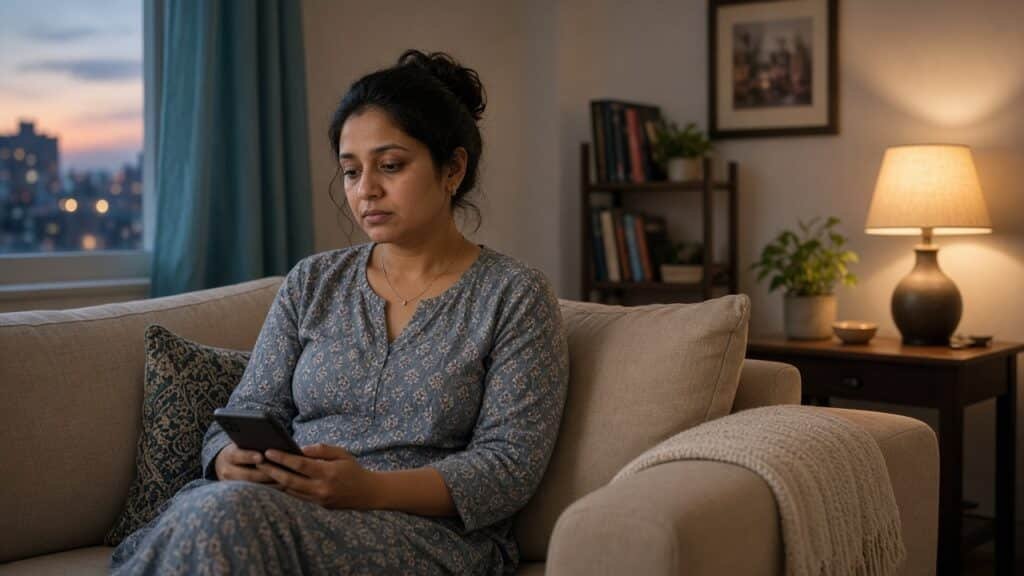
You have already decided the pattern at home is not working. Your partner has not.
Maybe they said counselling is for "weak" people. Maybe they said, "You are the one with the problem." Maybe they went quiet, changed the subject, or agreed once and then cancelled every time a booking got close.
If you keep circling what if my partner won't go to couples counselling, you are in a common bind: waiting for a joint "yes" that may arrive late, or never.
This article will not hand you a script that makes them agree. Nothing honest can. It can name why people refuse, how to raise the idea without cornering them, what still shifts when only one person starts, and when a joint session is the wrong goal.
Why Partners Often Refuse Couples Counselling
Refusal is not always stubbornness. Sometimes it is fear with a firm voice.
People say no because they worry the counsellor will take your side. Or because talking about the marriage outside the house feels shameful, especially with parents or in laws nearby. Some were raised to believe strong people "handle it." Some fear being blamed for the temper, the affair, the silence. A few have met a bad counsellor before, or watched a relative use "therapy talk" as a weapon. And sometimes the no is really about control: counselling arrived as an ultimatum, not an invitation.
In India, stigma still sticks to the word for many families. That does not mean your partner should refuse forever. It does mean "we need therapy or we are done," said cold, often lands as attack rather than care.
None of this means wait forever. It means the first ask needs accuracy more than volume.
How to Ask Without Turning It Into a Fight
Timing matters. Raising counselling at 11pm after a three hour argument rarely goes well. A quieter moment (after food, during a walk, when neither of you is already defending a position) gives the idea more room.
What tends to land better:
- Speak about the pattern, not their character. "We keep ending the same way" is different from "You never listen."
- Own your part in one sentence. Even a small one. It reduces the sense that counselling is a courtroom for them.
- Offer a low first step: one session, audio if video feels too exposed, or reading a short page together about what couples counselling actually is.
- Separate "I need support" from "you must come." Both can be true; saying them as one demand often fails.
One version that stays honest without a speech: "I am not trying to win. I am tired of us ending in the same place. I want us to try one joint conversation with someone trained. If you are not ready, I may still talk to someone alone, not to punish you, but because I cannot keep carrying this by myself."
That last part only works if it is true. A threat is punishment. A boundary is what you will do to stay steady.
Small practical note: share a plain explainer, not a long diagnosis of them. The couples counselling online page, or when couples counselling may be worth trying, is easier to hand over than a speech about their childhood.
What Usually Makes Refusal Worse
Some approaches feel productive in the moment and cost you later:
- Booking a joint slot secretly and "surprising" them
- Recruiting parents or siblings to pressure them
- Sending article after article until their phone becomes a lecture
- Framing counselling as proof they are the broken one
- Using children as messengers ("Ask Papa why he won't go")
Pressure can produce a temporary "fine, I will come." It rarely produces open talking in the room. Counsellors can often feel when one partner was dragged in. The work then spends early sessions on resistance instead of the actual pattern.
What Still Helps If You Start Alone
Individual relationship counselling is not a second best prize. For many people it is the only door that opens.
Working alone can help you:
- See your half of the cycle more clearly: how you pursue, withdraw, criticise, or shut down
- Practise calmer ways to raise hard topics at home
- Decide what you can live with, and what you cannot
- Reduce the loneliness of carrying the whole worry in secret
- Prepare for a future joint session without turning every dinner into a therapy session
Changing your own moves sometimes shifts the dance. It does not always. When it does not, you still leave with a clearer map than hope alone.
One caution: individual work is not a place to build a secret case file against your partner for later. The useful aim is understanding and choice, not ammunition.

When They Might Soften Later
Some partners say no the first three times and yes the fourth, after they see you are steadier, not more accusing. Others soften when the invitation becomes concrete and time limited: one session, a known format, a counsellor who will not take sides.
Signs curiosity may be growing:
- They ask what actually happens in a session
- They complain less about "your counselling ideas" and more about the pattern itself
- They suggest a different counsellor, language, or time, which is negotiation, not refusal
There is no reliable timeline. Waiting with a quiet limit ("I will keep going alone for now; in a few months we can revisit a joint session") is different from waiting with no plan.
When Refusal Is Information, Not a Delay
A hard, lasting refusal can mean several things. Only some of them improve with patience.
| What you might be seeing | What it can mean |
|---|---|
| Fear, stigma, or bad past experience | May soften with time, a gentle ask, or seeing you change first |
| "We are fine" while the house is not fine | Avoidance; individual work for you still matters |
| Refusal plus control, threats, or isolation | Safety concern: joint work may be the wrong tool |
| Clear "I will not work on this, ever" | Information about the relationship's limits, not a puzzle to solve alone |
Counselling cannot create willingness where there is none. If your partner will not engage with the relationship's problems in any form (not conversation, not counselling, not small experiments at home), that is part of the reality you are living in. Individual support can help you face that reality without rushing a dramatic decision, and without pretending the refusal is temporary when it is not.
When Joint Counselling Is Not Safe
If you feel afraid of your partner, or there is hitting, threats, sexual coercion, or control over money, phone, or movement, do not treat a joint session as the goal. Sitting together in a call can increase risk for the person with less power.
Start alone. Prefer individual support, and use local crisis help if you are in danger: 112, Women Helpline 181, Tele MANAS 14416 (free, 24x7).
Safety first
Wanting the relationship to improve does not require you to sit in a room, or on a call, where you cannot speak freely. Refusal of counselling is one issue. Fear of your partner is another. Treat them separately.
If You Want Structured Support
If both of you become willing, MindHope runs joint work as 75 minute couples sessions by audio or video. If only you are ready, individual relationship counselling does not need a shared booking first.
In joint work, a counsellor should not take sides or push you to stay or leave. Fit still matters. If a session feels unfair or unsafe, say so, or try someone else.
None of this is a test of being a "good" partner. The only useful test is whether talking to someone trained helps you think and act more clearly at home.
Frequently Asked Questions
Can counselling work if only one partner goes?
It can help the person who attends understand patterns, regulate conflict better, and make clearer decisions. It does not replace joint work when both people need to change how they talk to each other. Many couples start with one person and add a joint session later; some never do, and the individual work still has value.
Should I give an ultimatum?
Ultimatums sometimes come from real limits ("I cannot keep living like this past a certain point"). Used as a bluff, they usually damage trust. If you state a limit, mean it, and prefer to describe what you will do (seek support, change living arrangements, pause certain conversations) rather than what you will force them to do.
What if my partner says counselling is against our culture or religion?
For some people that belief is sincere; for others it is a way to end the topic. You can acknowledge the concern and still hold that seeking help for how you treat each other is not the same as rejecting family or faith. If the refusal stays absolute, individual counselling remains an option for you.
How many times should I ask before I stop asking?
There is no magic number. Repeated asks after a clear no often become nagging. One clear invitation, a pause, your own support, and a later revisit tends to work better than daily persuasion. If the answer stays no for months while the pattern stays harmful, treat the refusal as part of your decision making, not as unfinished sales work.
Will the counsellor tell my partner what I said in individual sessions?
In ethical practice, individual sessions stay confidential within the usual safety limits (risk of harm). If you later move to joint work, agree with the counsellor how prior individual material will be handled so nobody feels ambushed.
Is online counselling private enough if we live with family?
Only if you have a room or time when you will not be overheard. Headphones help; thin walls and shared phones do not. If privacy at home is impossible, that is a practical barrier to solve before booking, not a reason to abandon the idea forever.
You Do Not Have to Wait for a Shared Yes
A partner's no hurts. It does not always mean help is closed.
If they come around, a joint session can hold both voices. If they do not, starting alone still counts: clearer patterns, steadier talks, or a plainer view of what this relationship can and cannot become.
Start with individual relationship counselling See how couples sessions work