

Many couples wait longer than they meant to before asking for help. Not because they do not care, but because the line between "a rough patch" and "something we cannot sort alone" is rarely clear from the inside.
One partner wants to talk. The other wants peace. A fight that started about dishes ends up about respect. Or there is almost no fighting left, only a polite distance that feels harder to name.
If you have been asking when couples should seek counselling, that question usually appears after months of trying the same conversation at home and getting the same result.
This article is for understanding, not diagnosis. It will not declare your relationship "over," claim counselling always works, or suggest one session can undo years of strain. It can help you spot common signs that joint support may be worth trying, notice when a joint session is not the safest first step, and keep expectations realistic about what counselling can change.
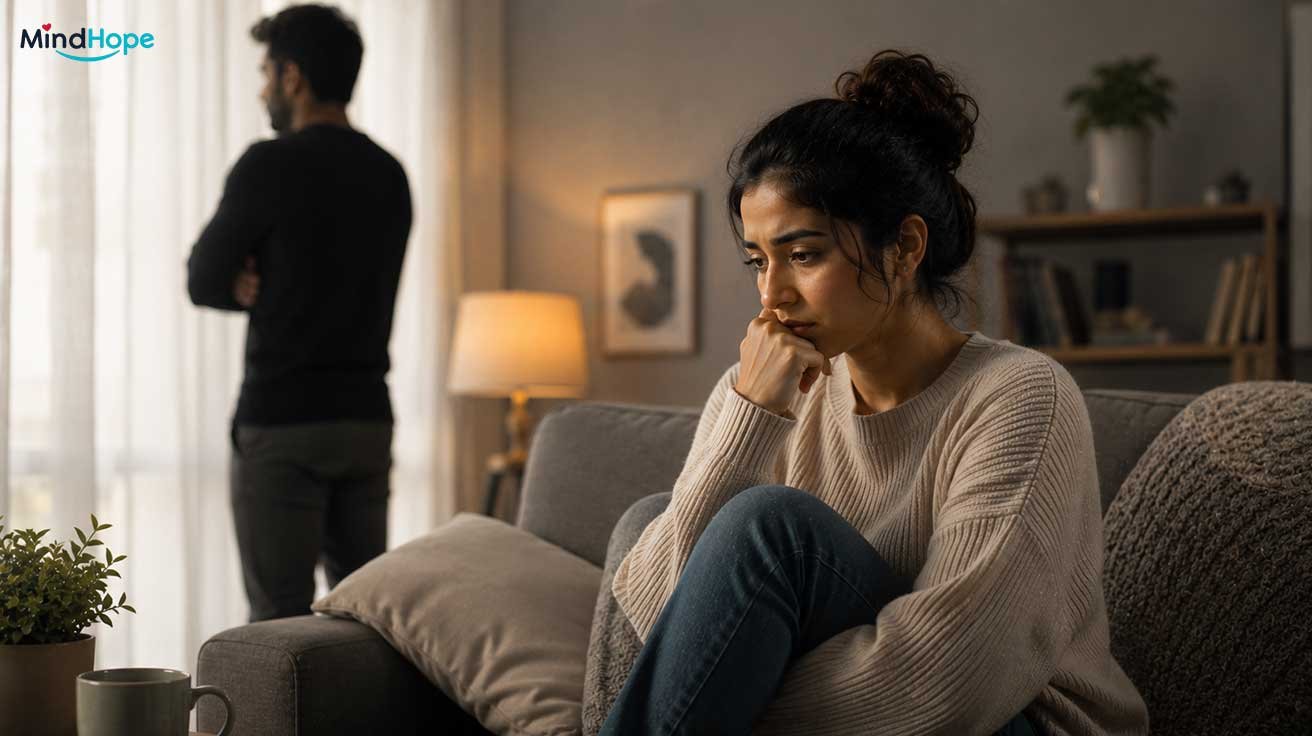
What Couples Counselling Is — and Is Not
Couples counselling is a structured conversation with a trained professional who works with both of you at once. The aim is usually not to decide who is "right," but to slow the interaction down enough that each person can be heard, and the pattern underneath the fights (or the silence) becomes easier to see.
It is not a court. The counsellor is not there to pick a winner, lecture one partner, or tell you whether to stay or leave. A competent couples counsellor stays as neutral as possible and tries to keep the space fair.
It is also not a guarantee. Some couples leave clearer and kinder with each other. Some leave clearer that they want different things. Both can be honest outcomes. Studies of couple therapy often find average improvement for many common problems, but averages hide a lot: the issue, the timing, safety at home, and whether both people actually engage all matter. No responsible clinician can promise that counselling will "save" a relationship.
In plain terms: most couples work is less about finding a "better" partner and more about seeing the cycle both of you get pulled into — pursue and withdraw, criticise and defend — and testing whether that cycle can shift.
Signs Couples Counselling May Be Worth Trying
You do not need to be at breaking point. Plenty of couples come simply because the same thing keeps repeating, and talking it out at home has stopped working.
The signs below are common. They are not a checklist that "proves" anything clinical. They are situations where a third person — someone outside the argument — can sometimes help both of you hear what keeps getting lost.
1. The same argument keeps returning
The topic changes — money, phone use, whose parents are visiting, who forgot what — but the shape of the fight feels identical. One person pushes for a resolution. The other goes quiet, or both escalate until someone leaves the room with the door shut a little harder than necessary.
When you can already predict the ending before either of you speaks, "try harder next time" is usually not enough. The pattern needs an outside view. For more on why fights loop, see the psychology behind constant arguments.
2. You feel lonely while living together
Meals still happen. Bills get paid. Someone remembers the school bag. What thins out is curiosity — the small "how was your day" that used to mean something. After a baby, a move abroad, or months of night shifts, plenty of couples feel more like flatmates than partners. That kind of distance can ease with effort on both sides. When it does not, joint counselling is one place to look at what keeps getting in the way. Related reading: emotional detachment in relationships.
3. Trust has been damaged
An affair, a major secret, or repeated broken promises can turn every conversation into a trial. A counsellor cannot erase what happened. What a structured setting can offer is a calmer place to talk about repair — or to decide, without the whole evening collapsing, what each person needs next.
4. Family or in-law pressure is pulling you apart
In many Indian homes the couple is never only two people. Money, festivals, who lives where, when to have children, how a daughter-in-law or son-in-law "should" behave — these expectations create loyalty splits that private talks often cannot hold. Counselling will not remove the relatives. It can help the two of you decide what you stand for together.
5. You are approaching a big decision
Marriage, moving cities, moving countries, having a child, or separating: these are moments when unspoken assumptions surface. Some couples book counselling before anything is "broken," simply because they want fewer surprises after the decision.
6. One or both of you feel stuck between staying and leaving
Ambivalence is common. It is also exhausting. A good couples counsellor will not push you to stay or to leave. The useful work is helping both people say, more honestly, what they need, what they will not accept, and what they are actually willing to change — so any later decision is less of a reaction and more of a choice.
7. Conversations regularly become unsafe or impossible
Contempt, days of silence, shouting that wakes the house, or using children as messengers: the interaction itself has become hard to manage. If both of you still want to try, a counsellor can slow the pace and set ground rules. If you feel afraid of your partner, skip ahead to the safety section — joint sessions are not always appropriate.
When Waiting, or Trying Something Else First, Can Make Sense
Not every rough week means you need a counsellor. Couples go through exams, illness, deadlines, travel, and grief. Temporary irritability after a sleepless month with a newborn is not the same as a years-long cycle of contempt.
It can make sense to wait a little, or try lighter steps first, when:
- The conflict is new, clearly tied to a temporary stressor, and both of you can still repair after a fight
- You have not yet tried a calm, specific conversation about one issue at a time
- One partner is in acute crisis (severe depression, untreated substance dependence, psychosis) and needs individual or medical care before joint work can be useful
- You mainly want tips, and both of you are already communicating fairly well
Even then, "waiting" should have a limit. If three months pass and the same pattern is still running the house, hoping it will vanish on its own is often optimism, not a plan.
When a Joint Session Is Not the Right Start
If you feel afraid of your partner, or there is hitting, threats, sexual coercion, or control over money, phone, or movement, a joint session can make things less safe. The person with less power may not be able to speak freely. Talking about the relationship in front of the other person can also increase risk afterward.
In those situations, start alone. Individual relationship counselling or local specialised support is a safer first step. If you are in danger right now, call 112. The Women Helpline is 181. Tele MANAS (free, 24x7) is 14416.
Safety before "working on the marriage"
Counselling assumes both people can speak without fear of retaliation. If that is not true, protecting safety comes first. Wanting the relationship to improve does not require you to sit in a joint session that puts you at risk.
What Counselling Can Change, and What It Cannot Promise
People sometimes arrive hoping the counsellor will "fix" the other person. That is not how this work usually goes.
| Often possible | Not something counselling can guarantee |
|---|---|
| Naming the cycle you both get stuck in | That your partner will change on your timeline |
| Practising how to speak without constant blame | That love will return exactly as it once felt |
| Making hard topics less chaotic | That every marriage should stay together |
| Clarifying needs, limits, and next steps | A fixed number of sessions that "completes" the work |
| Helping you decide more clearly, even if the decision is to separate | Erasing past harm without repair work from both people |
Published studies of couple therapy tend to show benefit for many common problems, especially when both partners take part and physical violence is not the central issue. That is not the same as a warranty for your particular relationship. Fit with the counsellor, how severe the problem is, and outside pressures — money, illness, family interference — still shape what is realistic.
What If Only One of You Is Ready?
This is where a lot of couples get stuck. One person raises it carefully. The other says "we are fine" or "I am not talking to a stranger about us." Sometimes the first person books alone and hopes the second will join later.
You cannot force a partner into genuine joint work. Pushing usually hardens the refusal. Starting individually is still useful: noticing how you pursue, withdraw, criticise, or shut down can change the temperature at home even before anyone else walks into the room. If your partner later becomes curious rather than cornered, a joint session may feel less like an ambush.
If they refuse for good, that is information too. Counselling cannot manufacture willingness. It can help the person who is ready think more clearly about what they can and cannot live with.
Why Some Couples Prefer Online Sessions
For a lot of couples the question is practical, not philosophical. Online sessions mean no commute across the city after work, easier timing when one partner lives in another town or abroad, and a room you already know — instead of hoping you will not meet a neighbour in a clinic corridor.
Tone of voice and turn-taking still matter in joint work, which is why couples sessions are usually audio or video rather than chat. At MindHope they run as 75-minute joint sessions by audio or video. You can sit together on one laptop, or each join from a different place.
Online is a poor fit when someone needs emergency care, when nobody at home has a private room, or when safety concerns make a joint call risky. Those are practical limits, not a verdict on the relationship.
How MindHope Approaches Couples Work
MindHope offers online counselling in India. For couples, that means a joint session with a counsellor who tries to stay neutral, protects time for both voices, and helps you notice the pattern you may not see while you are inside the fight.
On the platform, couples work is set up like this:
- 75-minute audio or video sessions (chat is not offered for joint couples work)
- Mentors who meet MindHope's published qualification standards for the profiles they list
- No requirement to buy a long locked-in package
- Room to talk about conflict, distance, trust, family pressure, or a big decision — without being told you must stay together
If a joint session is not safe yet, individual relationship counselling is still an option. MindHope will not suit every couple. A first conversation should leave you clearer, not more sold.
Frequently Asked Questions
How do I know if we need couples counselling or just a break?
A short break can reduce heat. It rarely changes the underlying pattern by itself. If the same fight, silence, or distrust returns as soon as you are back in the same routines, counselling may be more useful than another pause.
Is couples counselling only for married people?
No. Dating, engaged, married, and long-term partners all use couples counselling. The format is about the relationship, not the legal status.
Will the counsellor take sides?
A couples counsellor should not take sides. Their job is to keep the conversation balanced and to help both of you understand the cycle. If you ever feel the room is consistently unfair, it is reasonable to say so or to try a different counsellor.
How many sessions do couples usually need?
There is no honest fixed number. Some couples feel clearer after a few sessions; others prefer weekly support for longer. Severity, goals, and how consistently you practise between sessions all matter. You should not be locked into a package you do not want.
What if we are not sure we want to stay together?
That is a valid reason to come, not a reason to stay away. Clarifying whether to stay or separate can be part of the work. A counsellor should help you decide with more honesty, not push a preferred ending.
Can online couples counselling work if we live in different cities or countries?
Often yes, if both of you have a private space and a stable connection. Many long-distance couples join the same call from two devices. See couples counselling online for how MindHope runs joint sessions.
If You Keep Hitting the Same Wall at Home
You do not need a perfect explanation before asking for help. For many couples the sign is plain: you have tried talking, and the same cycle still runs evenings and weekends.
If both of you are willing, a joint session can be a steadier place to start. If only one of you is ready, individual support still matters.
Details of format and booking are on the couples counselling online page. Book when both of you feel ready — or begin alone if that is where you are.
Book a couples session Start with individual relationship counselling